
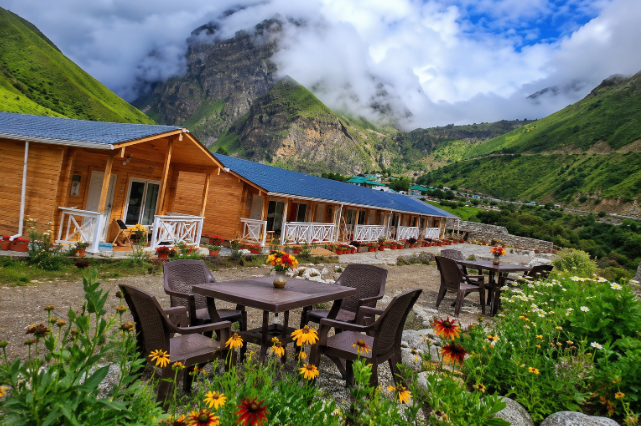
Mana sits above the treeline at just over 3,200 meters, and the Khasra land parcel near the ITBP camp is on the upper edge of the village before the road continues toward the high-altitude trekking routes. On a clear morning — which most of the pilgrimage season provides before the afternoon clouds come in — the valley view from this position looks out over the confluence of the Saraswati and Alaknanda rivers and toward the ridgelines that mark the beginning of the restricted zone. It is a view that cannot be replicated from any hotel in Badrinath town at any price, because it is simply not geographically available there.
The practical implication of staying at Mana rather than in Badrinath itself is that temple visits require transport. A shared taxi to the Dham takes roughly 10 to 15 minutes and can be arranged through the resort. The flip side is that Mana village itself—the last settlement, the Vyasa Gufa cave, the Ganesh Gufa, and the Saraswati River disappearing underground—is at the front door. Guests staying at the resort are placed to explore Mana in the early morning before the day-trippers arrive from Badrinath, which is when the village has a completely different character.
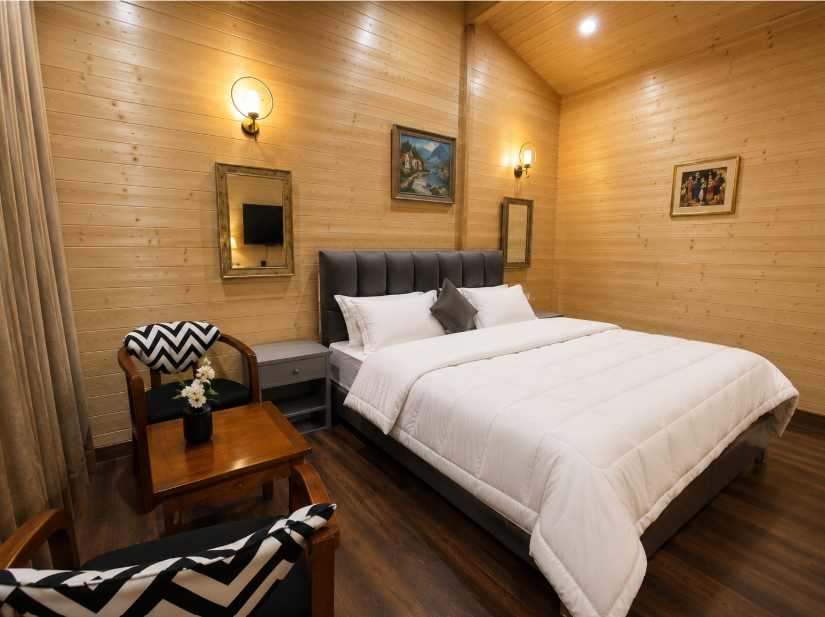
The Executive Suite at Badri Resort Mana represents the top of the accommodation range across the entire Badrinath region covered in this content. At ₹11,000 to ₹15,500 per night, it is positioned for guests who are treating this as a serious Himalayan stay rather than a budget yatra stop, and it delivers on that expectation within the honest constraints of a remote mountain location. The Luxury Valley View Room is the more accessible entry point. Both two phone numbers should be tried if one does not connect—mountain network coverage in Mana can be intermittent.