
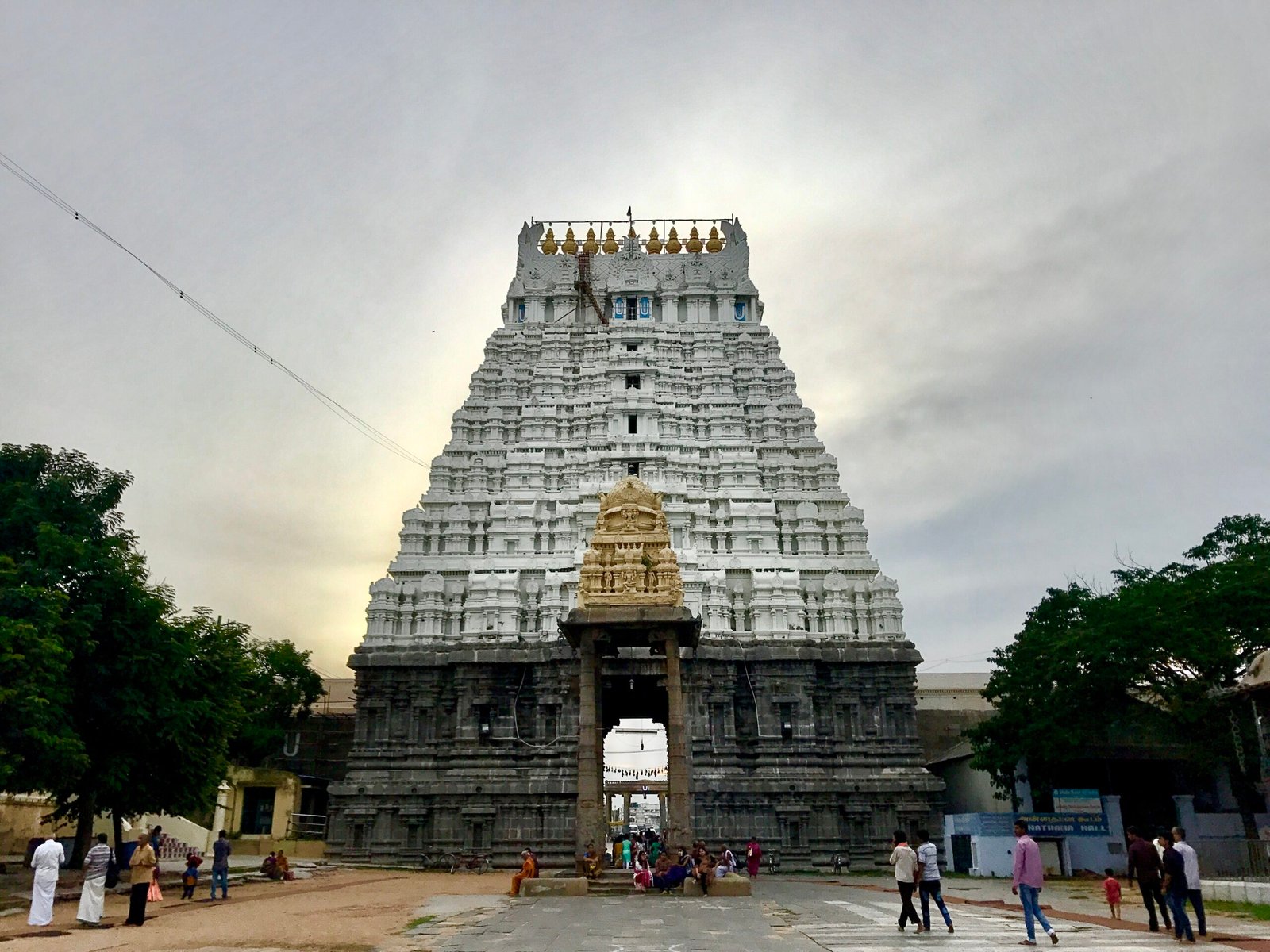
About Varadharaja Perumal Temple, Kanchipuram, Tamil Nadu
Varadharaja Perumal Temple, also known as Devarajaswamy Temple or Perumal Koil, is dedicated to Lord Varadharaja, a form of Lord Vishnu. It is one of the 108 Divya Desams revered in the Sri Vaishnava tradition and stands on Hastigiri in Kanchipuram.
The temple is known for its long history in Vishnu worship, the shrine of Perundevi Thayar, its large Dravidian complex and the Athi Varadar tradition. Its daily worship, Vaikasi Brahmotsavam, Vaikunta Ekadasi and other utsavams continue through the year, while the temple's connection with Ramanuja and other Sri Vaishnava acharyas is an important part of its religious history.
Story of Varadharaja Perumal Temple
The temple complex developed over several centuries. Chola patronage is recorded in the 11th century, including a major phase dated to 1053, followed by further additions under later Chola rulers. The complex continued to grow under the Vijayanagara rulers, whose period is especially visible in the large mandapas, sculptural work and ceremonial spaces.
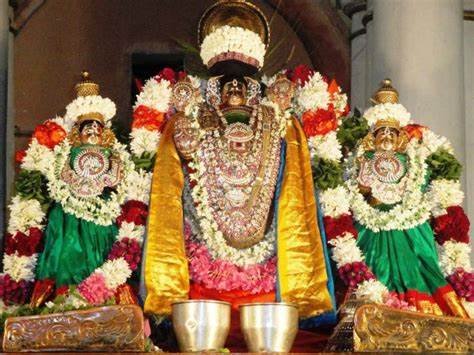
The presiding deity is Lord Varadharaja Perumal, worshipped in a standing form on Hastigiri. Perundevi Thayar, the consort of Varadaraja, has her own shrine within the complex. The temple also contains shrines for several other Vishnu forms and Vaishnava acharyas, including Ramanuja, Vedanta Desika, Dhanvantari, Varaha, Ranganatha, Venugopala and Chakrathazhvar, reflecting the wider Sri Vaishnava tradition of the temple.
The complex covers about 23 acres and contains numerous shrines, vimanas and pillared halls. Its most noted architectural features include the towering gopurams, the 100-pillared mandapa built during the Vijayanagara period, carved scenes from Hindu epics and a stone chain carved from a single block. The gilded lizard figures near the sanctum are another well-known feature of the temple.
The main shrine stands on the hill known as Hastigiri or Attigiri, and the vimana above it is known as the Punyakoti Vimanam. The temple's inscriptions, sculptures, paintings and later additions show how the complex expanded from an older Vishnu shrine into one of the major temple centres of Kanchipuram.
What Makes Varadharaja Perumal Temple Sacred for Devotees
The legend of Brahma and Varadaraja
According to the temple's Sthala Purana, Brahma performed a yajna at Kanchipuram to worship Lord Vishnu. The river Vegavati, identified in the tradition with Saraswati, is said to have risen and threatened to disturb the sacrifice.
Lord Vishnu is believed to have stopped the flood by lying across the path of the river. After Brahma completed the yajna, Vishnu appeared as Varadaraja, the giver of boons, and remained at Hastigiri for the worship of devotees.
This is a sacred temple tradition rather than a historical account of the temple's construction.
Why the hill is called Hastigiri
The name Hastigiri, meaning elephant hill, is connected in temple tradition with the story of an elephant worshipping Lord Vishnu. Another traditional account identifies the elephant with Gajendra, whose devotion to Vishnu is remembered as part of the sacred history of Kanchipuram.
The hill on which the main shrine stands therefore forms part of the temple's religious identity, not simply its physical setting.
Varadaraja Perumal and Ramanuja
Varadaraja Perumal Temple has a close association with Sri Ramanuja, the principal teacher of Vishishtadvaita Vedanta. Sri Vaishnava tradition also remembers Thirukkachi Nambi, a devotee of Varadaraja who served the deity and is closely linked with Ramanuja's early spiritual life.
Traditional accounts say that Thirukkachi Nambi conveyed responses from Lord Varadaraja to Ramanuja, including the well-known set of six statements remembered in Sri Vaishnava tradition. The association is one of the reasons the temple occupies such an important place in the religious history of Kanchipuram.
Athi Varadar
One of the temple's most distinctive traditions concerns Athi Varadar, a sacred wooden image of Varadaraja made from fig wood. The image is kept submerged in the temple tank known as Anantha Saras and is brought out for public worship only at long intervals, traditionally once in about forty years.
The most recent major exposition took place in 2019, when the image was displayed for a special period of worship. Athi Varadar is therefore part of the temple's religious tradition, but it is not the form of Varadaraja seen during ordinary daily worship.
The golden lizards
Two lizard figures covered in gold and silver are preserved in the temple near the sanctum. Temple tradition associates them with two disciples of Sage Gautama who were cursed to take the form of lizards and were later released through the grace of Lord Varadaraja.
The story belongs to the religious tradition of the temple. The lizard figures themselves are among its better-known artistic and devotional features.
Annual Festivals & Rituals at Varadharaja Perumal Temple, Kanchipuram, Tamil Nadu
Daily Worship Celebrations at the Temple
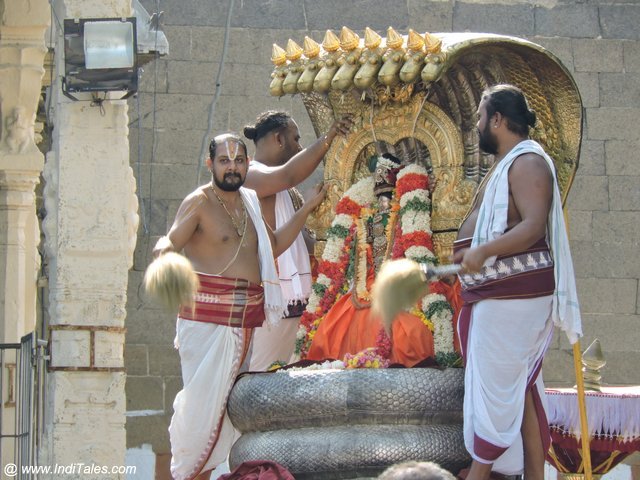
The temple follows a regular cycle of Thiruvaradhanam, offerings and other daily services. Public darshan takes place around these rituals, so the exact flow can change when a seva or special observance is being performed.
Vaikasi Brahmotsavam Celebrations at the Temple
The Vaikasi Brahmotsavam is the principal annual festival of the temple and is traditionally celebrated in Vaikasi, usually falling in May or June. The utsava deity is taken in procession on different vahanas, with Garuda Sevai and the temple chariot procession among the important observances.
Vaikunta Ekadasi Celebrations at the Temple
Vaikunta Ekadasi is an important Vaishnava festival at Varadharaja Perumal Temple. Special worship and ceremonial observances are held during the occasion, attracting larger numbers of devotees than an ordinary day.
Purattasi Navaratri Celebrations at the Temple
The Purattasi season is significant for Vishnu worship in Tamil Nadu, and the temple observes Navaratri with special rituals and offerings. The festival forms part of the temple's annual cycle of utsavams.
Adhyayanotsavam Celebrations at the Temple
Adhyayanotsavam is connected with the recitation of the Tamil Vaishnava hymns of the Nalayira Divya Prabandham and occupies an important place in Sri Vaishnava temple tradition. The observance links the temple's ritual calendar with the devotional literature of the Alvars.
Athi Varadar Utsavam Celebrations at the Temple
Athi Varadar is not an annual festival. The wooden image is traditionally brought out only once in about forty years, making the exposition a separate and exceptional event in the temple calendar.
Sacred Places to Visit Near Varadharaja Perumal Temple
Kamakshi Amman Temple : Kamakshi Amman Temple is one of the principal Shakti shrines of Kanchipuram and an important centre of Shakta worship. Together with Varadharaja Perumal and Ekambareswarar, it reflects the different major Hindu traditions represented in the temple city.
Ekambareswarar Temple : Ekambareswarar Temple is dedicated to Lord Shiva and is one of the Pancha Bhoota Sthalas associated with the element of earth. Its large gopuram and thousand-pillared mandapa make it one of the best-known temples in Kanchipuram.
Kailasanathar Temple : Kailasanathar Temple is one of the oldest surviving structural temples of Kanchipuram and an important Pallava monument. It is known for its early Dravidian architecture and stone sculpture.
Ashtabhuja Perumal Temple : Ashtabhuja Perumal Temple is another Divya Desam in Kanchipuram and is dedicated to Lord Vishnu in his eight-armed form. It can be combined with Varadharaja Perumal Temple as part of a Vaishnava pilgrimage through Kanchipuram.
Yathothkari Perumal Temple : Yathothkari Perumal Temple, also known as Thiruvekka, is another important Vishnu shrine in Kanchipuram and forms part of the city's concentration of Divya Desams.
Kanchipuram Mutt : Kanchipuram's major religious institutions, including the Kanchi Mutt, form part of the city's wider religious history and can be visited along with its principal temples.
Plan Varadharaja Perumal Temple Darshan
For current darshan planning, queue information, detailed timing and Naman Darshan's Guided Darshan Assistance, continue to the dedicated Varadharaja Perumal Temple Darshan page.
Common Questions About Visiting Varadharaja Perumal Temple
Visitor Information
Entry Fee
General temple entry is available; specific sevas may be ticketed – Do not treat paid seva as a separate general admission requirement.
Darshan Timing
Address
Arulmigu Devarajaswamy Temple, Varadharaja Perumal Sannathi Street, Chinna Kanchipuram, Kanchipuram, Tamil Nadu – 631501, India
Notable Events
11th century — Chola development – A major Chola phase of the temple is recorded around 1053, with later Chola rulers expanding the complex. • 14th century — Further expansion – Additional walls and gateway structures were added as the temple continued to develop. • 16th century — Vijayanagara expansion – The temple received major additions in the Vijayanagara period, including large mandapas, sculpture and other ceremonial features. • 1517 — Krishnadevaraya period – The temple's history records Vijayanagara patronage during the reign of Krishnadevaraya, including the tradition associated with the temple chariot. • 1532 — Achyutaraya inscription – Inscriptions record Achyutaraya's visit and major gifts to the temple, including the famous royal endowment recorded in the temple inscriptions. • 1688 — Images moved for protection – During a period of invasion and political instability, the principal temple images were taken to Udayarpalayam for safekeeping. • 1710 — Return to Kanchipuram – The images were brought back to the temple, and the return became part of the temple's later commemorative tradition. • 2019 — Athi Varadar exposition – The wooden Athi Varadar image was brought out for public worship, continuing the long periodic tradition.
How to Reach the Temple
By rail: Kanchipuram Railway Station is the nearest railway station and connects the city with Chennai and other parts of Tamil Nadu.
By air: Chennai International Airport is the nearest major airport. Kanchipuram can be reached from the airport by road.
By road: Kanchipuram is well connected with Chennai and other towns in Tamil Nadu by road. Buses, taxis and local autos are available within the city.
Within Kanchipuram: The temple is in the eastern part of Kanchipuram, in the area traditionally known as Vishnu Kanchi. Local autos and taxis provide access from the railway station and other parts of the city.
Darasuram, near Kumbakonam, Tamil Nadu