
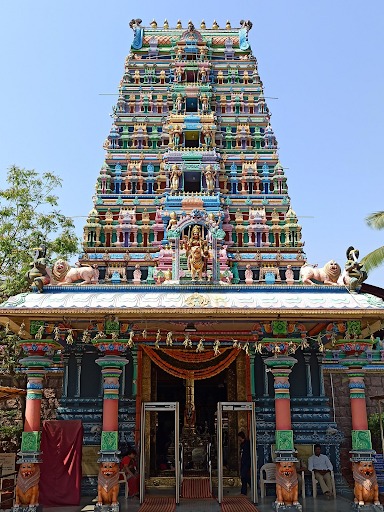
About Sri Peddamma Thalli Temple, Hyderabad, Telangana
Sri Peddamma Thalli Temple, also known as Peddamma Gudi, is a well-known shrine of the Mother Goddess in Jubilee Hills, Hyderabad. Peddamma is worshipped in Telangana as a village form of the Divine Mother, and the name is traditionally understood as “Mother of Mothers.”
The temple is closely associated with Bonalu, Mahotsavam and Rathotsavam, along with regular puja and devotional observances. Its present form grew from an older local shrine and was substantially developed in the 1990s, giving the temple the large gopuram and temple complex seen today.
Story of Sri Peddamma Thalli Temple
Peddamma Thalli is worshipped as a Mother Goddess in Telangana's village-deity tradition. The temple's own tradition connects her with Durga and Shakti, while devotees approach her primarily as the protective mother of the community. The name Peddamma itself expresses this relationship with the goddess as the elder or supreme mother.
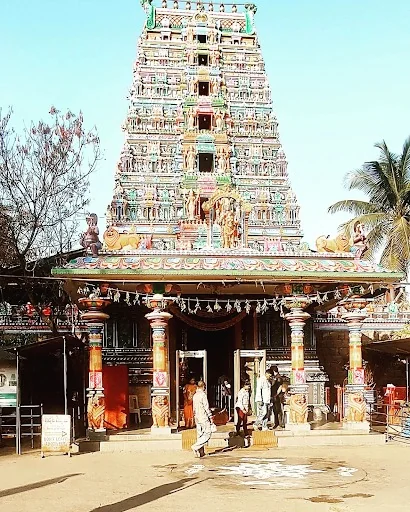
The exact age of the original shrine is not firmly documented. The temple's own published history says there is no clear evidence for its beginning, although local tradition considers the shrine to have existed for about 150 years. A major change came in 1993, when the temple was developed on a much larger scale and the Raja Gopuram was constructed.
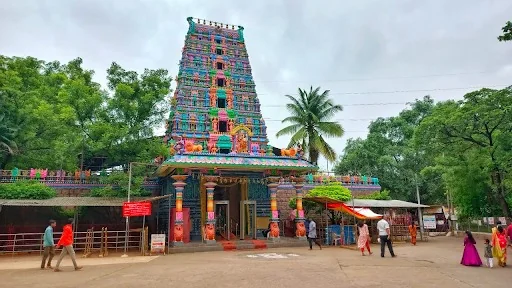
The present complex reflects that later development. Temple and trust material describe a seven-tier Raja Gopuram, five-tier Garbha Gudi and Kalyana Mandapam, with smaller shrines for deities including Lakshmi, Ganapati, Saraswati and Naga Devata. The architecture follows a South Indian temple form, while the scale of the later complex reflects the growth of the shrine's following in modern Hyderabad.
The temple's identity has therefore grown alongside the city. What was once a small local shrine became a major urban place of worship, while the older village-deity character of Peddamma remained central to its festivals and devotional traditions.
What Makes Sri Peddamma Thalli Temple Sacred for Devotees
Peddamma as the Mother of Mothers
Peddamma is understood by devotees as a mother who watches over the community. Her worship belongs to the wider tradition of village goddesses found across Telangana, where the goddess is approached as a close and protective presence rather than as a distant deity.
This is also reflected in the name Peddamma, meaning “Mother of Mothers.” The tradition places emphasis on protection, family welfare and the relationship between the goddess and the local community.
The Mahishasura Tradition
The temple's own story is framed around the well-known Durga tradition of the battle with Mahishasura. In this account, the gods call upon the combined power of the Divine Mother to defeat the buffalo demon, and Durga emerges with the weapons of the gods before defeating him.
This story belongs to Hindu sacred tradition and explains Peddamma through the larger Shakti understanding of the goddess as the power that removes adharma and restores order.
The Well and Shepherd Tradition
A popular local account connects the shrine with a well on the temple grounds. According to this tradition, after defeating the demon, the goddess came to the area to drink water, and a shepherd later discovered her image near the well.
The story is part of the local sacred tradition of Peddamma and helps explain why the shrine came to be associated with this particular place. It should be understood as a religious tradition rather than as a documented historical account.
The Coin-Balancing Tradition
One of the better-known local practices at Peddamma Gudi is the balancing of a coin upright at a traditional spot near the temple. Devotees make a prayer while attempting to keep the coin standing, and local belief regards a successful balance as an auspicious sign.
This is a folk devotional practice, not a guarantee that a particular wish will be fulfilled. The custom remains part of the distinctive visitor tradition associated with the Jubilee Hills shrine.
Annual Festivals & Rituals at Sri Peddamma Thalli Temple, Hyderabad, Telangana
Daily Puja and Aarti Celebrations at the Temple
The temple follows a daily cycle of worship, offerings and aarti for Peddamma Thalli. Special pujas and abhishekams are performed during festival periods and other important occasions.
Bonalu Celebrations at the Temple
Bonalu, observed during Ashada Masam, is the temple's most important annual festival. Devotees offer Bonam, traditionally prepared with cooked rice, milk and jaggery and carried in decorated pots by women. The festival reflects the strong connection between Peddamma worship and Telangana's living folk-Shakti traditions.
Mahotsavam Celebrations at the Temple
The annual Mahotsavam is one of the principal festival periods at Peddamma Gudi. It brings together special worship, homams and other rituals over several days.
Rathotsavam Celebrations at the Temple
Rathotsavam, associated with Ratha Saptami, is the temple's chariot festival. The utsava murti of Peddamma is taken in procession on a decorated chariot as part of the annual celebration.
Shakambari Utsavam Celebrations at the Temple
Shakambari Utsavam is another important observance associated with the temple and the worship of the Goddess in her nourishing form. The occasion is marked by special decoration and worship.
Navratri and Dussehra Celebrations at the Temple
The temple also observes Navratri, Durga Ashtami and Dussehra with special worship of the Goddess. These days connect Peddamma's local worship with the wider Shakti tradition of celebrating the victory of the Goddess over evil.
Sankranti and Ugadi Celebrations at the Temple
Sankranti and Ugadi are also observed at the temple as part of the annual religious calendar. These festivals bring seasonal and new-year worship into the temple's regular cycle of devotion.
Sacred Places to Visit Near Sri Peddamma Thalli Temple
KBR National Park : Kasu Brahmananda Reddy National Park is located in Jubilee Hills and forms part of the wider green landscape around the temple area.
Durgam Cheruvu : Durgam Cheruvu is a well-known urban lake near Jubilee Hills and Madhapur. It can be included in a wider visit to the western part of Hyderabad.
Hyderabad Jagannath Temple : The Jagannath Temple in Banjara Hills is a modern temple built by Hyderabad's Odia community and dedicated to Lord Jagannath. It provides a different temple tradition within the same part of the city.
Birla Mandir : Birla Mandir, on Naubat Pahad, is dedicated to Lord Venkateswara and is one of Hyderabad's prominent modern Hindu temples.
Golconda Fort : Golconda Fort is one of Hyderabad's major historic landmarks and can be visited as part of a wider south and west Hyderabad itinerary.
Film Nagar : Film Nagar lies close to Jubilee Hills and forms part of the urban area surrounding the temple.
Plan Sri Peddamma Thalli Temple Darshan
For current darshan timings, queue information, seva details and Naman Darshan's guided assistance, continue to the dedicated Sri Peddamma Thalli Temple Darshan page.
Common Questions About Visiting Sri Peddamma Thalli Temple
Visitor Information
Entry Fee
Generally free – Individual sevas may have separate arrangements.
Darshan Timing
Address
Sri Peddamma Thalli Temple, 204, Road No. 55, CBI Colony, Jubilee Hills, Hyderabad, Telangana 500033, India
Notable Events
Local shrine tradition — about 150 years – The exact founding date is not firmly documented, but temple tradition places the shrine's beginnings roughly 150 years in the past. • 1993 — Major temple development – The shrine entered a major phase of expansion and the Raja Gopuram was constructed. • 1994 onward — Growing annual festival following – The temple's own published material records a steady rise in festival participation from the mid-1990s. • 2007 — 13th annual festival documented – The temple's 13th annual festival included the Rathotsavam chariot procession on Ratha Saptami, along with special pujas, homams and Annadanam. • Present day — Major Jubilee Hills shrine – Sri Peddamma Thalli continues to be listed by Telangana Tourism and the Hyderabad District administration, and the temple is also represented in Telangana's Endowments records.
How to Reach the Temple
By Metro: Peddamma Gudi Metro Station is the most direct metro access for the temple area. It is on Hyderabad Metro's Blue Line and is located near the temple.
By Air: Rajiv Gandhi International Airport serves Hyderabad. From the airport, the temple can be reached by road through the city.
By Rail: Hyderabad's major railway stations, including Secunderabad Junction and Hyderabad Deccan, connect with the wider city transport network. Continue to Jubilee Hills by Metro, taxi or local transport.
By Road: The temple is on Jubilee Hills Road No. 55, close to the main road connecting the Jubilee Hills area with the wider western Hyderabad corridor.
Within Jubilee Hills: The final approach to the temple may become busier on festival days and during peak devotional periods. Allow additional time when travelling during Bonalu or major annual celebrations.
Chilkur, Telangana