
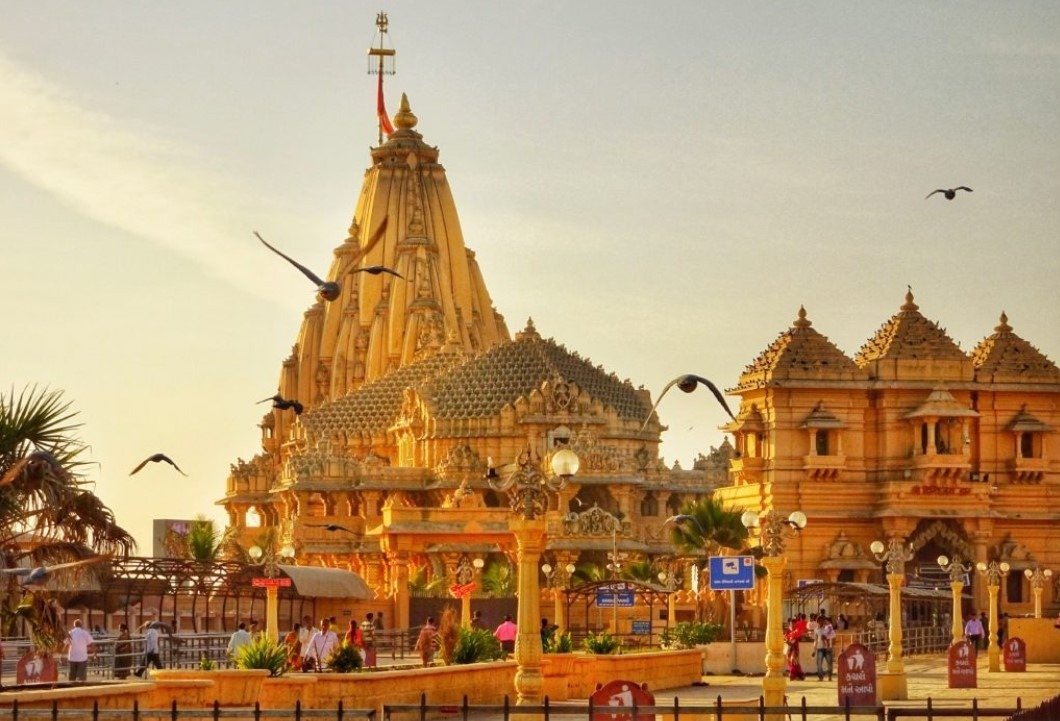
About Somnath Jyotirlinga, Prabhas Patan, Veraval, Gujarat, India
On the western coast of Gujarat, where the Arabian Sea stretches beyond the shoreline, stands Somnath Jyotirlinga, one of the most revered Shiva temples in India. Located at Prabhas Patan, the temple is traditionally regarded as the first among the twelve Jyotirlingas of Lord Shiva.
The name Somnath means "Lord of the Moon." Lord Shiva is worshipped here as Somnath, and the temple's connection with the Moon is at the heart of one of its oldest and most loved legends.
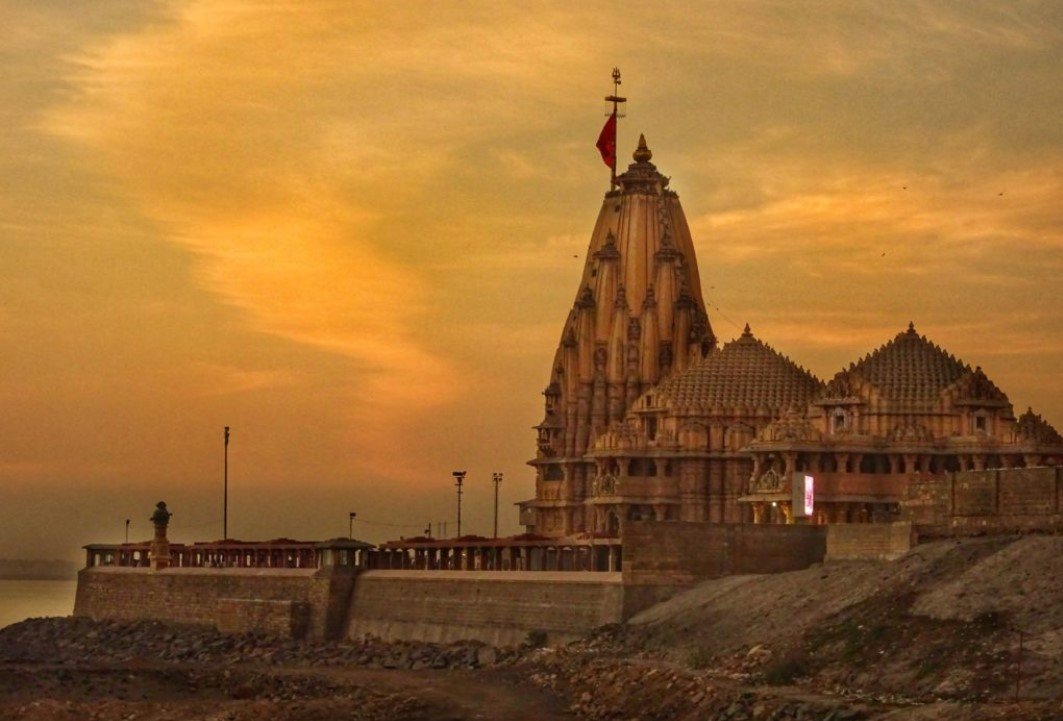
The present temple stands directly facing the sea and is built in the traditional Chaulukya style of temple architecture. Its tall shikhara rises above the coastline, creating one of the most recognisable spiritual landmarks in Gujarat.
Somnath has a remarkable history. The temple was destroyed and rebuilt several times over the centuries, yet worship of Lord Shiva has continued at this sacred site. The present temple was rebuilt after India's independence and consecrated in 1951.
There is something special about Somnath that is difficult to describe only through its history. The temple, the open sea and the quiet strength of the shrine together create an atmosphere that many visitors remember long after they leave.
Story of Somnath Jyotirlinga
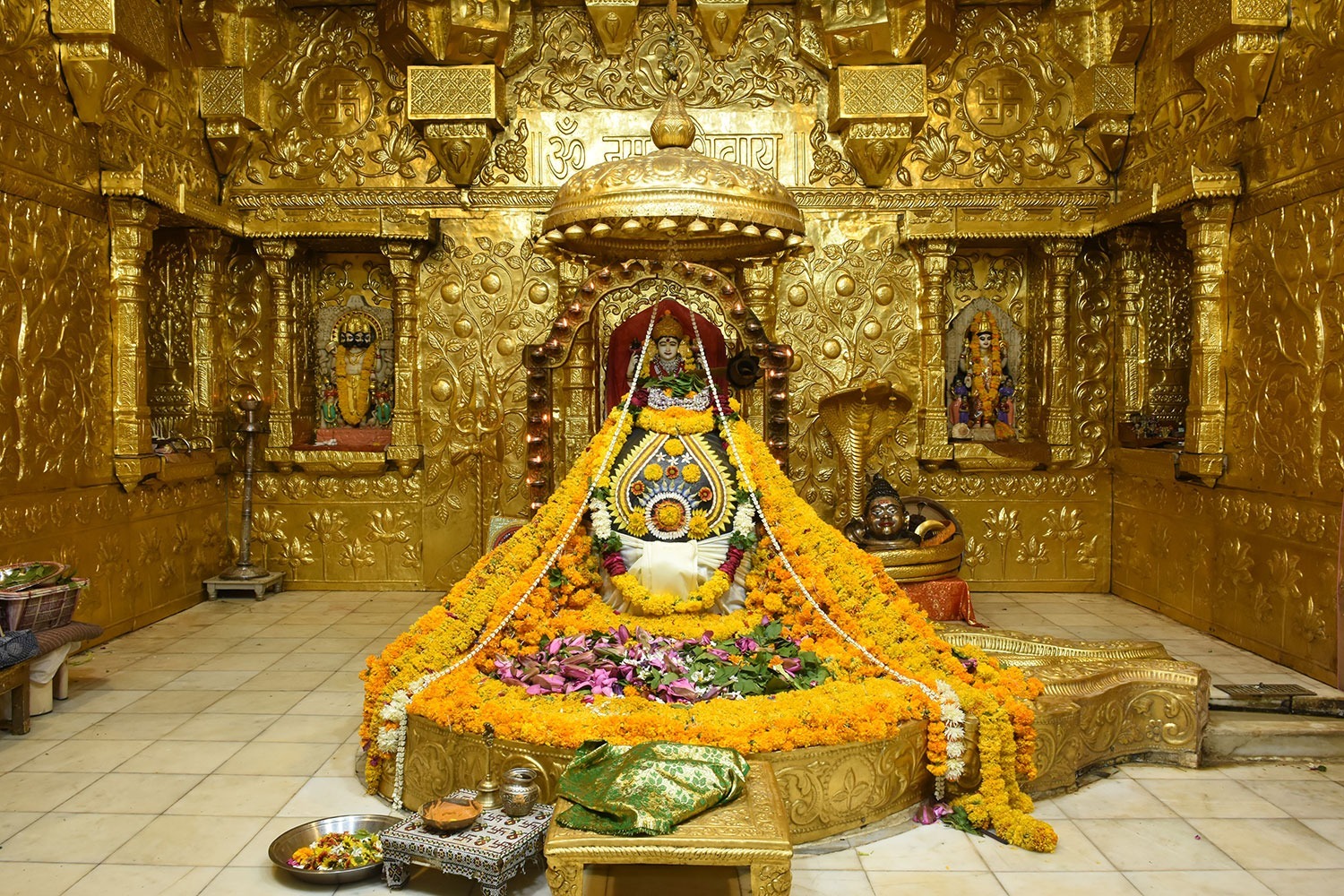
The Story of the Moon God
The most famous story connected with Somnath begins with Chandra, the Moon God.
According to Hindu tradition, Chandra married the 27 daughters of Daksha Prajapati, who are associated with the 27 nakshatras. Chandra, however, was especially devoted to Rohini. Daksha became unhappy with this and is said to have cursed Chandra, causing him to gradually lose his brightness.
Seeking relief, Chandra came to the sacred land of Prabhas and prayed to Lord Shiva.
Moved by his devotion, Shiva appeared before him and eased the curse. Chandra regained his brightness, though in a cycle of waxing and waning. In gratitude, Chandra is believed to have established a shrine for Lord Shiva at this sacred place.
This is how the name Somnath became associated with the temple—Soma being another name for the Moon.
For devotees, the story has an especially beautiful meaning. The Moon loses its light and then finds it again, reminding people that difficult times do not last forever.
A Temple That Was Rebuilt Again and Again
Somnath's history is unlike that of most temples.
The shrine has faced repeated destruction through different periods of history and has been rebuilt several times. One of the most well-known attacks took place in the 11th century, when Mahmud of Ghazni attacked the temple.
Later rulers and periods brought further destruction and rebuilding. Yet the sacred identity of Somnath never disappeared.
After India's independence, the decision was taken to rebuild the temple once again. Sardar Vallabhbhai Patel played an important role in this effort. The foundation stone was laid in 1950, and the reconstructed temple was consecrated in 1951.
For this reason, Somnath is remembered not only as an ancient Shiva shrine but also as a symbol of faith, resilience and renewal.
The Temple by the Arabian Sea
One of Somnath's most striking features is its setting.
The temple stands beside the Arabian Sea, with nothing interrupting the horizon in the southern direction. The famous Baan Stambh, or Arrow Pillar, on the sea-facing side reflects this orientation and has become one of the temple's notable features.
The architecture of the present temple follows the traditional Chaulukya style, with detailed stone carving and a tall shikhara rising above the coast.
What Makes Somnath Jyotirlinga Sacred for Devotees
Lunar Healing: It is the site where the Moon God was cured of his curse, making it a powerful center for those seeking mental peace and healing.
Moksha Puri: It is believed that a darshan of the Jyotirlinga at Somnath liberates the soul from the cycle of rebirth.
The Eternal Abode: Even during the Pralaya (dissolution of the universe), the power of Somnath is said to remain intact.
Annual Festivals & Rituals at Somnath Jyotirlinga, Prabhas Patan, Veraval, Gujarat, India
Mahashivratri
Mahashivratri is among the most important festivals at Somnath.
The temple and the surrounding area become filled with devotional activity as devotees come together to celebrate the night dedicated to Lord Shiva. Prayers, chanting and special religious ceremonies form an important part of the occasion.
Shravan Month
The month of Shravan holds a special place in Shiva worship. Throughout this period, devotees traditionally offer prayers and seek Lord Shiva's blessings.
At Somnath, the temple atmosphere becomes especially devotional during Shravan, as people come to honour the Jyotirlinga.
Kartik Purnima
Kartik Purnima is another important occasion in the Somnath religious calendar. The sacred month of Kartik has a special place in Hindu tradition, and celebrations around Somnath attract devotees from different parts of the country.
Somnath Sthapana Divas
The temple also observes Somnath Sthapana Divas, remembering the reconstruction and establishment of the present temple after India's independence.
It is a meaningful occasion because rebuilding is such an important part of Somnath's modern story.
Other Religious Celebrations
Other Hindu festivals and religious occasions are also observed throughout the year, keeping the temple connected with the wider spiritual traditions of the region.
Sacred Places to Visit Near Somnath Jyotirlinga
Triveni Sangam
Near Somnath is Triveni Sangam, traditionally regarded as the meeting point of the Hiran, Kapila and Saraswati rivers. The place is considered sacred and is closely connected with rituals for ancestors.
Bhalka Tirth
Bhalka Tirth is associated with the final earthly journey of Lord Krishna. According to Hindu tradition, Krishna was resting here when he was accidentally struck by an arrow from a hunter named Jara.
The site is an important part of the sacred landscape around Somnath.
Golok Dham
Golok Dham is another place connected with the final journey of Lord Krishna. It carries a strong spiritual significance for devotees and is often included in the wider pilgrimage around Prabhas.
Prabhas Patan Museum
The Prabhas Patan Museum preserves old sculptures, architectural fragments and remains connected with earlier temples at the site. It offers a glimpse into the long and complicated history of Somnath.
Panch Pandav Gufa
The Panch Pandav Gufa is traditionally associated with the Pandavas. Though small and simple compared with the main temple, it is part of the network of sacred places that surround Somnath.
Somnath Beach
The sea beside Somnath is part of what makes the temple so memorable. Somnath Beach offers a different atmosphere from the temple itself, with the sound of the Arabian Sea creating a peaceful setting around the sacred town.
Planning to explore the complete pilgrimage circuit? Visit our [Somnath Travel Guide] for nearby places, routes and stay information.
Common Questions About Visiting Somnath Jyotirlinga
Yes. Devotees are expected to wear modest traditional attire. Avoid shorts and sleeveless clothes.
No. High-security measures are in place. Electronic items, leather belts, and cameras must be deposited in the free locker facility outside.
October to March offers pleasant weather. Early mornings and late evenings are best for a peaceful darshan.
Darshan is generally available from 6:00 AM to 9:00 PM, with multiple aartis throughout the day.
The temple generally opens for devotees from 6:00 AM to 9:30 PM every day. Pilgrims can have darshan throughout the day except during specific ritual timings. Morning hours are usually calmer, allowing devotees to experience a peaceful and spiritually fulfilling visit.
Yes, several sacred rituals are performed daily at Somnath Jyotirlinga. Major Aarti ceremonies take place three times a day—morning, noon, and evening. Devotees can also participate in special poojas and abhishek rituals organized by the temple trust for spiritual blessings and divine grace.
Visitors must follow strict temple guidelines such as maintaining traditional dress, respecting temple decorum, and cooperating with security checks. Mobile phones, cameras, and electronic devices are not allowed inside the temple premises. Devotees should also maintain silence and cleanliness while standing in the darshan queue.
The best time to visit Somnath Temple is during early morning hours on weekdays, when crowds are relatively smaller. Avoid peak pilgrimage seasons and major festivals if you prefer a peaceful darshan.
Visitor Information
Entry Fee
No Fee
Darshan Timing
Address
Shree Somnath Jyotirlinga Temple Prabhas Patan, Veraval, District: Gir Somnath, Gujarat - 362268, India.
Notable Events
Installation by Sardar Patel: The modern reconstruction was initiated in 1947 and the Pran Pratishtha was done by Dr. Rajendra Prasad. Somnath Mahotsav: An annual cultural event showcasing Gujarat's heritage. The Sound & Light Show: Narrated in the voice of Bollywood legend Amitabh Bachchan, depicting the temple’s history.
How to Reach the Temple
By Air: The nearest airport is Keshod (55 km) or Rajkot (200 km).
By Rail: Veraval Railway Station (7 km) is well-connected to major cities like Ahmedabad, Rajkot, and Mumbai.
By Road: Somnath is well-connected via NH8 to Ahmedabad (400 km) and Dwarka (230 km).