
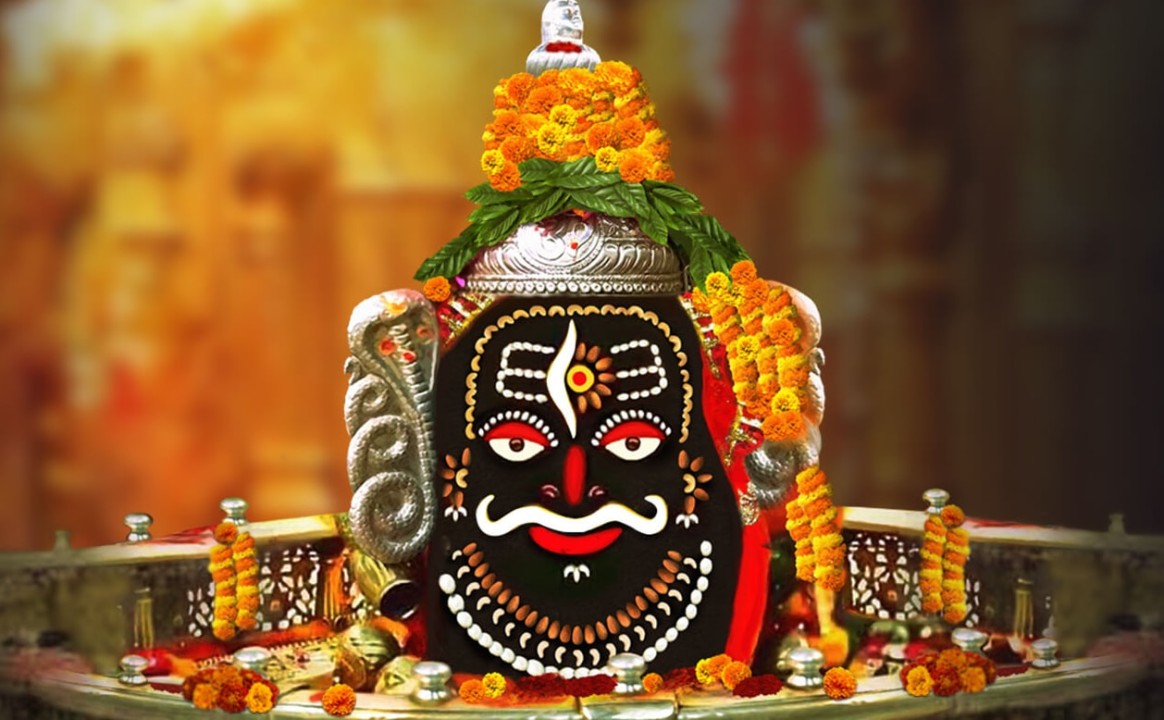
About Mahakaleshwar Jyotirlinga, Ujjain, Madhya Pradesh
Mahakaleshwar Jyotirlinga is one of the twelve Jyotirlingas of Lord Shiva and the presiding deity of Ujjain. The temple is traditionally associated with Mahakal, Shiva as the Lord beyond ordinary measures of time, and the Jyotirlinga is revered as Swayambhu, or self-manifested.
Mahakaleshwar is distinctive among the Jyotirlingas for its south-facing form, known as Dakshinamukhi. The temple is also known for its daily Bhasma Aarti, the Mahakal Sawari during Shravan, and the annual opening of the Nagchandreshwar shrine on Nag Panchami.
Story of Mahakaleshwar Jyotirlinga
The sacred history of Mahakaleshwar is closely connected with the history of Ujjain itself. Ancient Ujjayini, also known as Avanti, was an important centre of religion, learning and astronomy, and Mahakal became closely identified with the religious life of the city.
The temple is described in the Puranic traditions associated with Ujjain, while Sanskrit literature also preserves the importance of Mahakal. Kalidasa is among the poets associated with descriptions of Ujjain and its sacred landscape. The district administration describes Mahakal as the distinctive presiding deity of Ujjain and connects the city with the historical calculation of time.
The history of the present structure is later than these traditions. The temple was destroyed during Sultan Iltutmish's invasion of Ujjain in 1235 CE. The shrine continued as a place of worship despite the destruction of the earlier structure, and the present temple complex emerged during the Maratha period in the 18th century.
After the Maratha conquest of Malwa, Ranoji Rao Shinde entrusted the reconstruction of the temple to his Diwan, Ramchandra Baba Shenvi. The rebuilding in the 1730s established the structure that forms the basis of the present Mahakaleshwar complex.
Mahakaleshwar therefore has two histories that need to be understood together. The sacred history of Mahakal reaches back into Ujjain's religious traditions, while the physical temple seen today belongs largely to the later history of Maratha-era reconstruction.
The Jyotirlinga is traditionally regarded as Swayambhu. In the religious understanding of the shrine, the presence of Shiva here is not treated simply as an image installed by human agency but as a self-manifested form of the deity.
Mahakaleshwar is also the only Jyotirlinga traditionally described as facing south. This Dakshinamukhi form gives the shrine a particular place in Shaiva tradition and is closely associated with Mahakal's relationship with time, death and the limits of mortal existence.
For Ujjain, Mahakaleshwar is therefore more than an individual temple. Mahakal is part of the city's identity, its ritual calendar and its sacred geography.
Deities and Architecture of Mahakaleshwar Jyotirlinga
The principal deity is Mahakaleshwar, the Jyotirlinga of Shiva enshrined in the lowest level of the temple.
The temple has a distinctive vertical arrangement. The Mahakaleshwar shrine is below, the Omkareshwar Shivalinga is enshrined on the level above it, and the uppermost level houses Nagchandreshwar. The Nagchandreshwar shrine is traditionally opened for public darshan only on Nag Panchami.
The sanctum is also associated with images of Ganesha, Parvati and Karttikeya, with Nandi positioned before the shrine. These associated forms are part of the ritual arrangement of the Mahakaleshwar sanctum rather than separate additions to the temple's story.
The present temple combines Bhoomija, Chalukya and Maratha architectural influences. Its five-level structure includes an underground level, while the main shrine rises within a larger temple complex containing additional shrines and ritual spaces.
The temple's architecture is closely connected with its history of rebuilding. It does not represent a single uninterrupted architectural period; the present complex reflects the Maratha reconstruction while retaining the importance of a sacred site that is considerably older than the building itself.
A Rudra Yantra is traditionally placed on the inner ceiling above the Jyotirlinga, while the Nandi image faces the sanctum. The temple complex also contains Koti Tirtha, a sacred water tank associated with the older history of the site.
The relationship between the different levels is significant because Mahakaleshwar is not simply a single sanctum surrounded by later structures. Mahakal, Omkareshwar and Nagchandreshwar form a vertical sequence within the same temple, with each shrine carrying its own place in the ritual calendar.
What Makes Mahakaleshwar Jyotirlinga Sacred for Devotees
The Mahakal and Dushan legend
The best-known origin tradition of Mahakaleshwar is associated with the Shiva Purana.
According to the traditional account, Ujjain was ruled by King Chandrasena, a devotee of Lord Shiva. A young devotee named Shrikhar wished to worship Shiva with the king but was prevented from doing so.
At the same time, enemies prepared to attack Ujjain with the help of the demon Dushan. Shrikhar and the priest Vridhi prayed to Shiva for the protection of the city.
The tradition says that Shiva appeared in the form of Mahakal, defeated Dushan and protected Ujjain. The devotees then asked Shiva to remain in the city, and Mahakal stayed as the Jyotirlinga at Ujjain.
This account belongs to sacred tradition. It explains why Mahakaleshwar is understood not only as a Jyotirlinga but as the protecting deity of Ujjain.
Why Mahakal is associated with time
The name Mahakal carries a direct association with Kala, or time.
Ujjain's own historical traditions reinforce this association. The city was an important centre for the calculation of time and astronomy, while Mahakal was regarded as its presiding deity.
In the religious understanding of the temple, Shiva as Mahakal stands beyond the ordinary movement of time. This is also reflected in the south-facing form of the Jyotirlinga, which is traditionally understood through Shaiva and tantric associations with death and the southern direction.
The idea is theological rather than scientific: Mahakal represents the deity who stands beyond the time that governs human life.
Mahakaleshwar and Shakta tradition
Ujjain is also a major centre of Shakta worship, with Harsiddhi among its important goddess temples. Mahakaleshwar itself is associated in some traditions with the wider Shakta sacred geography of Ujjain.
Different traditional accounts vary regarding the precise identification of the body part of Sati associated with the site. These accounts should therefore be presented as part of Shakta tradition rather than as a single historically established description.
The larger religious landscape of Ujjain contains Shaiva, Shakta, Vaishnava, ascetic and other traditions side by side. Mahakaleshwar sits at the centre of this older sacred landscape.
Annual Festivals & Rituals at Mahakaleshwar Jyotirlinga, Ujjain, Madhya Pradesh
Bhasma Aarti Celebrations at the Temple
The Bhasma Aarti is the most distinctive daily ritual associated with Mahakaleshwar. Performed in the early morning, the ritual includes the ceremonial offering of sacred ash to the Jyotirlinga. The tradition is closely associated with the Shaiva understanding of impermanence, renunciation and the relationship between Shiva and time. The Shri Panchayati Akhada Mahanirvani, located within the temple premises, has a traditional role in the preparation and offering of the Bhasma used for the ritual. According to the temple's account, the ash is prepared from cow-dung cakes according to prescribed ritual practice and is ceremonially offered by the Mahant or an authorised representative of the Akhada. Bhasma Aarti is therefore part of the temple's living Shaiva tradition rather than simply a ritual scheduled for visitors.
Daily worship at Mahakaleshwar Celebrations at the Temple
The temple's ritual day continues through several forms of worship and aarti. These include the morning rituals around Bhasma Aarti, Bhog Aarti, Sandhya Aarti and Shayan Aarti. The exact schedule changes with the temple calendar. Darshan can also be affected when a ritual or offering is being performed, so a general temple opening range should not be treated as a guarantee of uninterrupted public darshan.
Mahakal Sawari Celebrations at the Temple
During Shravan and Bhadrapada, Mahakal is taken through Ujjain in the traditional Mahakal Sawari. The procession begins with the Monday Sawaris during Shravan. The final procession is the Shahi Sawari, the royal procession of Mahakal. The tradition has a particular meaning within Ujjain. Mahakal does not remain confined to the temple during the Sawari; the processional form of the deity moves through the city and appears before devotees along the route. The Sawari therefore forms a connection between the temple and the city that worships Mahakal as its presiding deity.
Nag Panchami Celebrations at the Temple
Nag Panchami has a special place in the Mahakaleshwar calendar because the Nagchandreshwar shrine on the upper level of the temple is opened to devotees on this occasion. The annual opening distinguishes Nagchandreshwar from the other principal shrines within the complex and makes Nag Panchami one of the temple's most distinctive ritual days.
Mahashivratri and Shiv Navratri Celebrations at the Temple
Mahashivratri is one of the major annual observances at Mahakaleshwar. Worship continues through the night and large numbers of devotees gather around the temple. The temple also observes Shiv Navratri in the days leading up to Mahashivratri, with special worship and ceremonial observances. Other annual traditions include Vijayadashami Sawari, Uma Sanjhi and festival-specific forms of worship and procession. Major festival days can change access, routes, crowd arrangements and darshan procedures. Current temple notices should be followed for date-specific planning.
Sacred Places to Visit Near Mahakaleshwar Jyotirlinga
Mahakal Lok : Mahakal Lok forms part of the contemporary pilgrimage landscape around Mahakaleshwar. Its large sculptural installations and Shaiva-themed visual program extend the approach to the temple into a broader public pilgrimage space. The newer complex sits alongside an older sacred landscape rather than replacing it. For visitors, Mahakal Lok provides context for the scale of the pilgrimage centred on Mahakaleshwar.
Ram Ghat : Ram Ghat lies on the banks of the Shipra River and is one of Ujjain's principal sacred riverfronts. The Shipra is closely connected with Ujjain's religious life, and the riverfront becomes particularly important during major religious gatherings and festival periods.
Harsiddhi Temple : Harsiddhi is one of Ujjain's important Shakta shrines. The temple is associated with the worship of the Goddess and contains the Sri Yantra as an important symbol of Shakti. Its location within the old sacred landscape of Ujjain makes it a natural part of a pilgrimage around Mahakaleshwar.
Kal Bhairav Temple : Kal Bhairav is one of the major Shaiva shrines of Ujjain. The district administration connects the temple with the wider tradition of the eight Bhairavas and records the continuing ritual offering associated with Kal Bhairav. The shrine represents another aspect of Ujjain's Shaiva religious landscape.
Mangalnath Temple : Mangalnath stands beside the Shipra and is traditionally regarded as the birthplace of Mars, or Mangal. The site also has an older association with astronomical observation. Its location and traditions add another connection between Ujjain's religious geography and its history of studying celestial movements.
Sandipani Ashram : Sandipani Ashram belongs to a different strand of Ujjain's sacred history. According to tradition, Krishna and Sudama studied here under Guru Sandipani. The ashram therefore connects the Shaiva pilgrimage around Mahakaleshwar with Ujjain's older Vaishnava and educational traditions.
Vedh Shala : Ujjain's observatory reflects the city's historical importance in astronomy and timekeeping. The connection is especially relevant when understood alongside Mahakal's identity as the deity associated with time. The temple and observatory belong to different institutions and periods, but both form part of Ujjain's long relationship with the measurement and interpretation of time.
Plan Mahakaleshwar Darshan
Mahakaleshwar has different arrangements for ordinary darshan, Bhasma Aarti and other forms of worship. For current darshan planning, entry requirements, Bhasma Aarti arrangements and Naman Darshan's Guided Darshan Assistance, continue to the dedicated Mahakaleshwar Darshan page. Naman Darshan's assistance is independent of the temple administration. It does not alter the temple's official rules or guarantee priority access where the temple has not provided it.
Common Questions About Visiting Mahakaleshwar Jyotirlinga
Visitor Information
Darshan Timing
Address
Shri Mahakaleshwar Jyotirlinga, Jaisinghpura, Ujjain, Madhya Pradesh – 456001, India, The temple administration's official office is located at the Shri Mahakaleshwar Jyotirlinga Karyalay, Prashasnik Bhawan, Ujjain.
Notable Events
Ancient period: Mahakaleshwar develops within the older sacred landscape of Ujjain/Ujjayini. • Puranic tradition: Mahakal is established in religious tradition as the Swayambhu Jyotirlinga of Ujjain. • 1235 CE: The earlier Mahakaleshwar temple structure is destroyed during Iltutmish's invasion of Ujjain. • 18th century: The shrine is reconstructed during the Maratha period. • 1730s: Ramchandra Baba Shenvi undertakes the rebuilding associated with the present temple complex. • Modern period: Mahakaleshwar remains the central Shiva shrine of Ujjain, with Bhasma Aarti, Mahakal Sawari and the annual Nagchandreshwar darshan continuing as living traditions. • Contemporary Ujjain: Mahakal Lok and other pilgrimage-infrastructure developments have expanded the public approach around the historic temple.
How to Reach the Temple
By air: Devi Ahilyabai Holkar Airport in Indore is the nearest major airport. Ujjain is connected to the airport by road.
By rail: Ujjain Junction is the principal railway station and is approximately 2 kilometres from the Mahakaleshwar Temple area.
By road: Ujjain has road connections with Indore, Bhopal, Ratlam and other major cities in Madhya Pradesh. Buses, taxis and private vehicles serve the city.
Within Ujjain: Auto-rickshaws, e-rickshaws, taxis and other local transport options operate around the temple and surrounding pilgrimage sites. During Mahakal Sawari and major festivals, vehicle access and drop-off points may be restricted or changed.
Mahakaleshwar is best understood through the relationship between the temple and Ujjain itself. The Jyotirlinga, the Bhasma Aarti, the Mahakal Sawari, the Shipra, the older Shaiva shrines and the city's traditions of timekeeping all belong to the same wider sacred landscape.
New Delhi, Delhi