
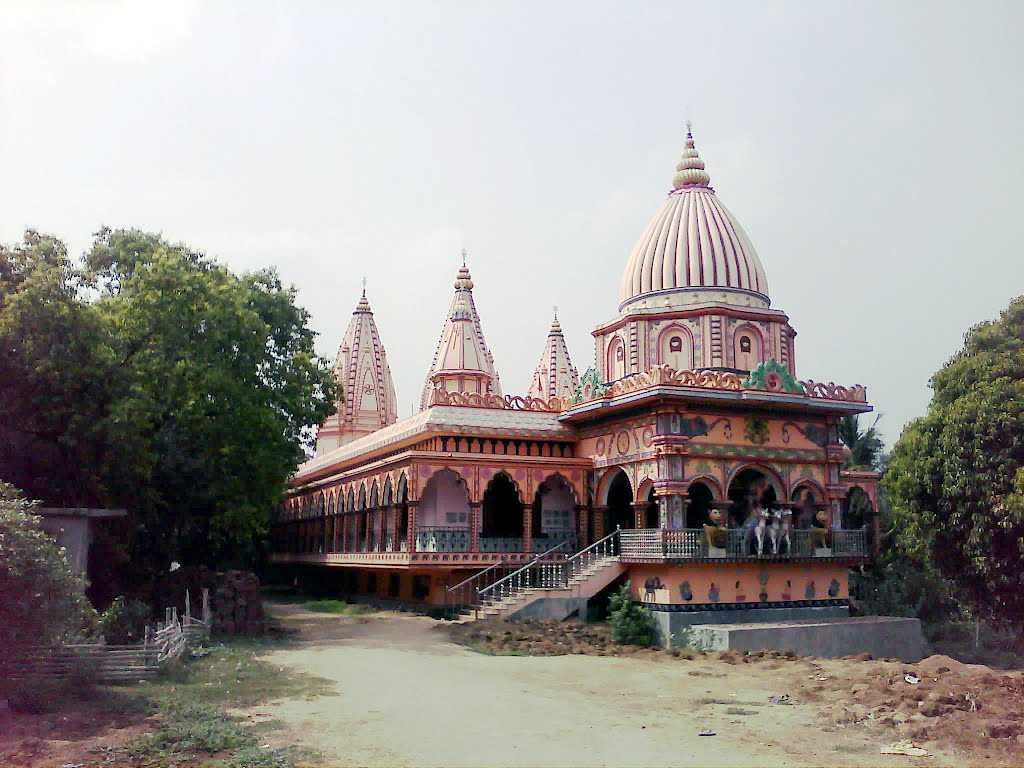
About Tara Temple, Tarapith, West Bengal
Tara Temple at Tarapith is dedicated to Goddess Tara, a principal deity of Shakta and Tantric worship in Bengal. The temple stands near the Dwarka River in Birbhum, with the Mahashmashan and several smaller shrines forming part of the sacred landscape around it.
The shrine is associated with Tara as the second of the ten Mahavidyas, the traditions of Sage Vashishtha and the 19th-century Tantric saint Bamakhepa. Tarapith is also linked with the Shakti Peetha tradition, although different religious texts and traditions vary in how the site is classified and which part of Sati is associated with it.
Story of Tara Temple, Tarapith
Tarapith is an older pilgrimage centre than the temple building seen today. West Bengal Tourism describes Tarapith as a historic temple site dating to the 13th century, while historical and academic sources place the present temple in the early 19th century. The existing structure was completed in 1818 by Jagannath Ray of nearby Mollarpur, replacing an earlier temple that had been damaged. Land had also been endowed to the temple in the mid-18th century by Rani Bhavani of Natore and her family.
The present shrine follows the at-chala style of Bengal temple architecture. Its eight sloping roof sections rise above thick red-brick walls, giving the temple the compact form typical of Bengal's traditional temple building. The temple is not defined by a large tower; its character comes from the roof form, brickwork, sanctum and the ritual spaces built around it.
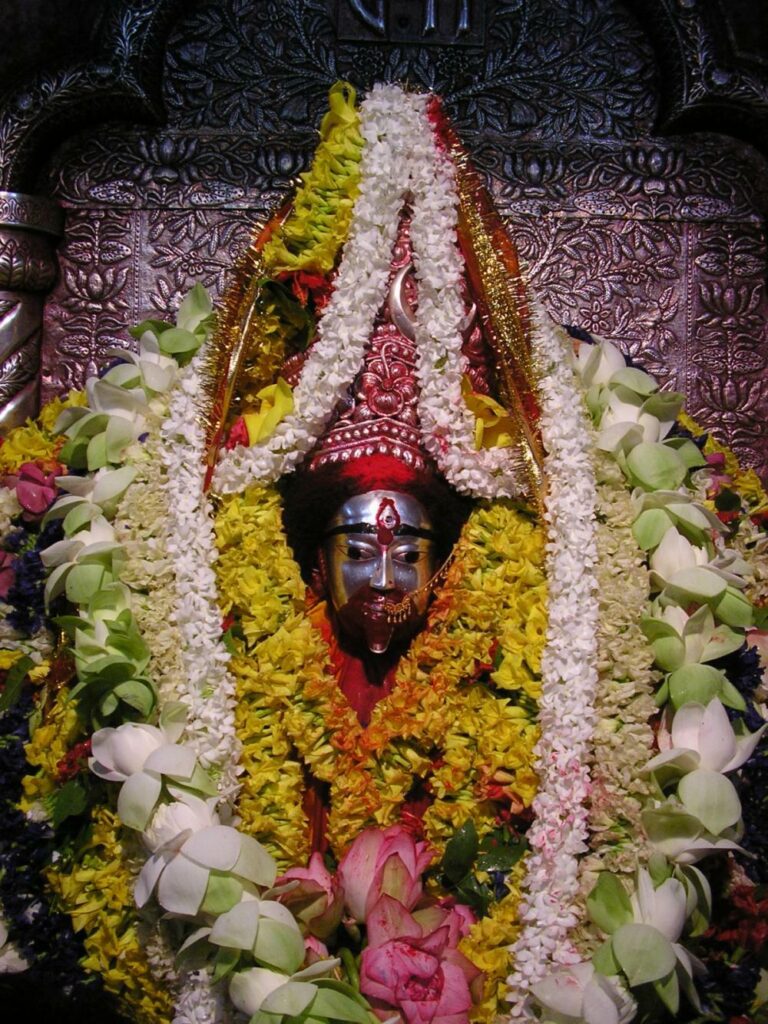
The sanctum has two forms of Tara in the temple tradition. The metal image is the form generally seen by devotees during the day, while an older stone image is associated with the tradition of Tara as the mother who nurses Shiva. The temple's present-facing description says that the original stone image is revealed after the evening aarti. The form and its daily adornment are an important part of Tarapith's worship.
The wider compound includes the Natmandir, Chandrachur Shiva Temple, shrines associated with Hanuman and Shashthi, the Bamakhepa shrine and Jivit Kunda. Beyond the temple lies the Mahashmashan, the cremation ground that has long been connected with Tantric practice at Tarapith. The temple and cremation ground are therefore closely connected in the religious geography of the town.
What Makes Tara Temple, Tarapith Sacred for Devotees
Tara and the Shakti Peetha Tradition
Tarapith is traditionally associated with the Shakti Peetha tradition. Different Shakta texts and regional traditions do not give an identical list of Peethas or the same body-part attribution for every site. At Tarapith, the tradition is commonly connected with one of Sati's eyes or her third eye.
For this reason, Tarapith's importance does not depend on one fixed version of the Peetha story. The shrine is widely recognised as a major centre of Tara worship and Tantric practice, and its sacred identity has been shaped by several overlapping traditions.
Vashishtha and Maa Tara
One of the best-known traditions tells of Sage Vashishtha, who came to Tarapith to worship Tara and perform Tantric austerities. In versions of the story, he was directed to follow a form of worship associated with the left-handed Tantric path and continued his practice at the cremation ground.
Tara later appeared to Vashishtha in the form he had sought: a mother holding and nursing Shiva. This maternal form became closely associated with the stone image worshipped at Tarapith. The story is part of the religious tradition of the shrine and explains why the fierce goddess is also approached here as a compassionate mother.
The Legend of Jivit Kunda
Another local tradition is connected with Jivit Kunda, the sacred pond beside the temple. A merchant named Jay Dutta is said to have lost his son while travelling along the Dwarka River. According to the legend, the boy came back to life after water from the pond was used over him.
The merchant is then said to have recognised the sacred nature of the place and dedicated himself to Tara. The story belongs to local devotional tradition and is one reason Jivit Kunda continues to be regarded as an important part of Tarapith.
Bamakhepa and Tarapith
Tarapith's modern religious history is closely linked with Sadhak Bamakhepa, the Bengali Tantric saint who lived from 1837 to 1911. He spent much of his life at Tarapith and practised in the Mahashmashan, where he became known for his intense devotion to Maa Tara.
Stories about Bamakhepa often describe a close relationship between the saint and the goddess. His reputation helped make Tarapith widely known beyond the immediate region, while his shrine near the temple remains an important place of devotion.
The Mahashmashan
The Mahashmashan beside Tarapith is part of the site's Tantric identity. In Shakta-Tantric tradition, the cremation ground is associated with meditation on death, impermanence and the nature of the Goddess.
Tarapith is therefore understood through more than the main temple alone. The shrine of Tara, the cremation ground, Jivit Kunda, the river and the memorials of Tantric practitioners together form the sacred setting of the pilgrimage.
Annual Festivals & Rituals at Tara Temple, Tarapith, West Bengal
Daily Worship at Tara Temple Celebrations at the Temple
The daily worship of Maa Tara begins early in the morning. Temple tradition describes the deity being awakened with music, followed by cleansing, bathing, adornment and Mangal Aarti. Food offerings are made during the day, followed by the evening Sandhya Aarti. The temple's ritual cycle also includes the traditional offering of Bhog. Animal sacrifice is part of the Tantric ritual tradition associated with Tarapith, though it is not a requirement for ordinary darshan.
Kaushiki Amavasya Celebrations at the Temple
Kaushiki Amavasya is one of the most important nights of the Tarapith calendar. It falls on the new moon of the Bengali month of Bhadra and is associated with the worship of the Goddess in her powerful form. Tarapith tradition also connects this night with the spiritual attainment of Bamakhepa. The temple and Mahashmashan remain important centres of worship during the observance.
Tara Jayanti Celebrations at the Temple
Tara Jayanti is observed on Chaitra Shukla Navami and marks the traditional appearance of Goddess Tara. Special worship is performed at the temple as devotees gather to honour Tara in her Mahavidya form.
Rath Yatra Celebrations at the Temple
Tarapith observes Rath Yatra on the same day as the Rath Yatra at Puri. The chariot procession is held within the temple grounds, linking the local Tara tradition with one of the best-known religious festivals of eastern India.
Kali Puja Celebrations at the Temple
Kali Puja is an important Shakta observance at Tarapith. The festival is marked by special worship and a strong devotional presence through the night, continuing the region's wider Bengali tradition of worshipping the Goddess during Amavasya.
Durga Puja Celebrations at the Temple
Durga Puja is also observed at Tarapith as part of Bengal's wider Shakta festival calendar. The temple follows its own ritual traditions while participating in the larger devotional season across West Bengal.
Phalaharini Amavasya Celebrations at the Temple
Phalaharini Amavasya is another important Amavasya observed at Tarapith. Along with Kaushiki Amavasya, it is regarded in the temple tradition as one of the significant nights for worship of Maa Tara.
Sacred Places to Visit Near Tara Temple, Tarapith
Mahashmashan : The Mahashmashan is the cremation ground beside Tarapith and one of the most important places for understanding the temple's Tantric tradition. It is closely associated with generations of sadhakas, including Bamakhepa.
Bamakhepa Shrine and Ashram : The shrine of Bamakhepa stands near the temple and commemorates the saint most closely associated with Tarapith's modern religious history. His ashram is located near the Dwarka River.
Jivit Kunda : Jivit Kunda is the sacred pond associated with the local legend of Jay Dutta. Its water has traditionally been connected with the worship and bathing rituals of Maa Tara.
Chandrachur Shiva Temple : Chandrachur Shiva Temple is part of the wider Tara temple complex. It also became the temporary place of worship for Maa Tara during the 2026 renovation of the main sanctum.
Nalhateshwari Temple : Nalhateshwari Temple at Nalhati is another important Shakta shrine in Birbhum and can be included in a wider pilgrimage around the district's sacred sites.
Bakreswar Temple : Bakreswar is an important Shiva pilgrimage centre in Birbhum, known for its temple complex and hot springs. It forms part of the wider network of religious places commonly visited in the district.
Plan Tara Temple Darshan
For current darshan planning, temple entry guidance and Naman Darshan's Guided Darshan Assistance, continue to the dedicated Tara Temple Darshan page.
Common Questions About Visiting Tara Temple, Tarapith
Visitor Information
Darshan Timing
Address
Tara Temple, Tarapith, Chandipur, Rampurhat, Birbhum, West Bengal 731233, India
Notable Events
Older pilgrimage tradition – Tarapith's sacred identity predates the present temple building, with the site appearing in Bengali religious traditions and later becoming an established centre of Tara worship. • 18th century — Rani Bhavani's patronage – Land was endowed to the temple in the mid-18th century by Rani Bhavani of Natore and her family. • 1818 — Present temple completed – The present Tara temple was constructed by Jagannath Ray of Mollarpur, replacing an earlier temple damaged by lightning. • 19th century — Bamakhepa's Tarapith period – Bamakhepa lived and practised at Tarapith, particularly around the Mahashmashan, and became the saint most closely associated with the modern identity of the shrine. • 20th century — Temple complex expands and receives further donations – Inscriptions and later additions record continued work on the temple compound, including the Natmandir, flooring, doors and other facilities. • 2023 — Major renovation work – The temple underwent restoration work that included changes to flooring, walls, the sacred platform and Bhog facilities. • September 2026 — Current sanctum renovation – The latest reported renovation began after Kaushiki Amavasya. Maa Tara was temporarily moved from the main sanctum to the Chandrachur Shiva Temple while work was carried out, with worship and darshan continuing at the temporary location.
How to Reach the Temple
By air: Kazi Nazrul Islam Airport at Durgapur is the nearest airport according to the Birbhum District Administration, at roughly 100 kilometres from Tarapith. Netaji Subhas Chandra Bose International Airport in Kolkata is another option, with a longer road journey.
By rail: Rampurhat Railway Station is the nearest railway station. Taxi and local transport are available for the onward journey to Tarapith.
By road: Tarapith is connected by road with Kolkata, Rampurhat and other towns in West Bengal. State-operated and private buses also connect Tarapith with Kolkata and neighbouring cities.
Within Tarapith: The temple stands within a busy pilgrimage town. The final approach is largely pedestrian, and vehicle access can be restricted or redirected during major festivals and high-footfall periods.
Kanyakumari, Tamil Nadu