
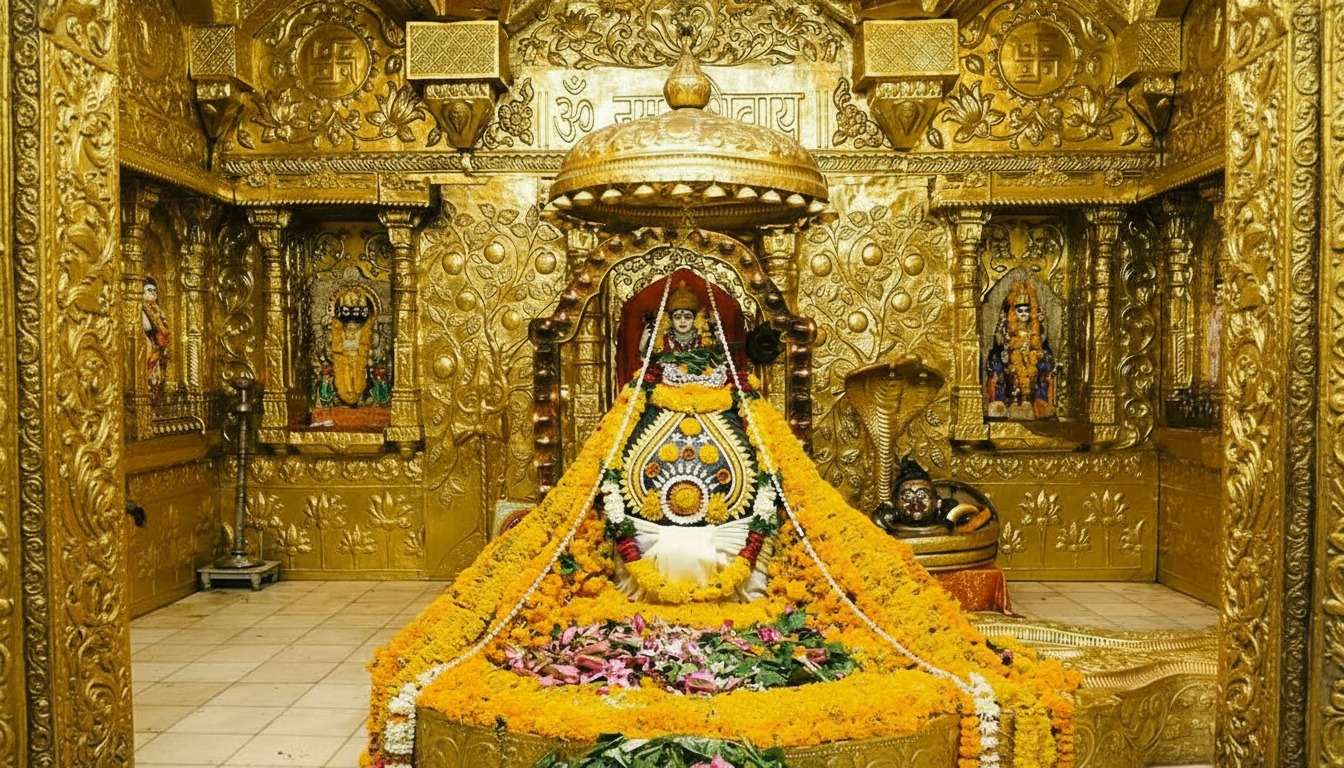
About Somnath Jyotirlinga, Prabhas Patan, Gujarat
Somnath Jyotirlinga is a major Shiva shrine on the western coast of Gujarat, at Prabhas Patan near Veraval. It is traditionally regarded as the first among the twelve Jyotirlingas and is worshipped as Lord Somnath, the Lord associated with Soma or the Moon.
The temple stands beside the Arabian Sea and is closely connected with the sacred landscape of Prabhas. The site is known for the Chandra legend, the Triveni Sangam tradition, the present Chaulukya-style temple and a long history of destruction, rebuilding and continued worship.
Story of Somnath Jyotirlinga
The sacred site of Somnath is older than the present temple. Prabhas has been known as a place of pilgrimage since ancient times, and religious traditions connect the area with the worship of Shiva as Someshvara or Somnath. The exact date of the earliest temple is not established, but historical records show that the shrine had become an important pilgrimage centre well before the present structure.
The temple underwent several phases of destruction and reconstruction over the centuries. Historical accounts record the raid of Mahmud of Ghazni in 1026, the rebuilding associated with Kumarapala in the 12th century, another destruction in 1299 and rebuilding under Mahipala I in the early 14th century. Further changes followed in later centuries.
After Independence, the temple was again taken up for reconstruction. Sardar Vallabhbhai Patel visited the ruins in November 1947 and supported the rebuilding of Somnath. The foundation was laid in 1950, and Dr Rajendra Prasad performed the Pran-Pratishtha of the present temple on 11 May 1951. Construction continued in stages, and the completed temple was formally dedicated in 1995.
Deities and Architecture of Somnath Jyotirlinga
The presiding deity is Lord Shiva worshipped as Somnath, one of the twelve Jyotirlingas. The name refers to Soma, the Moon, and links the deity directly with the temple's oldest religious tradition. The sanctum forms the centre of the present temple complex, with the Shiva linga worshipped through the daily cycle of puja and Aarti.
The present temple follows the Chaulukya style of temple architecture, also described in connection with the Kailash Mahameru Prasad tradition. Its principal arrangement includes the Garbha Griha, Sabha Mandap and Nritya Mandap, with carved stone work and a tall shikhara rising above the coastal landscape. The temple also includes the sea-facing Baan Stambh, or Arrow Pillar. An inscription on the pillar records the traditional claim that there is no land in a straight southern direction from that point until the South Pole.
The relationship between the temple and the sea is part of its identity. Somnath was built at the edge of Prabhas, and the open coast forms a visible part of the temple's setting rather than simply serving as a backdrop.
What Makes Somnath Jyotirlinga Sacred for Devotees
The Legend of Chandra and Somnath
The best-known tradition of Somnath begins with Chandra, the Moon God.
According to Hindu tradition, Chandra married the twenty-seven daughters of Daksha Prajapati, who are associated with the twenty-seven nakshatras. Chandra, however, favoured Rohini, causing Daksha to curse him and causing his brightness to diminish.
Seeking relief, Chandra came to Prabhas Tirth and worshipped Lord Shiva. Pleased with his devotion, Shiva relieved him from the curse. Chandra's light returned, although the tradition associates the waxing and waning of the Moon with the continuing effect of the curse.
Somnath means Lord of Soma, which is why the story of Chandra remains central to the religious identity of the temple.
Why Somnath is a Jyotirlinga
Somnath is traditionally counted among the twelve Jyotirlingas of Lord Shiva. The Jyotirlinga tradition describes Shiva as manifesting in these sacred forms and places, each becoming an important centre of Shaiva pilgrimage.
Somnath's position in this tradition is closely tied to Prabhas and to the belief that Shiva answered Chandra's penance at this place.
Prabhas and the Triveni Sangam
The sacred geography around Somnath is as important as the temple itself. The area is traditionally associated with the meeting of the Hiran, Kapila and Saraswati rivers, known as the Triveni Sangam, before the waters reach the Arabian Sea.
Because of this association, Prabhas has long been treated as a tirtha, or sacred crossing place. The river, temple and seacoast together form the larger religious landscape of Somnath.
The Tradition of Rebuilding
The history of Somnath is also part of its religious memory. The shrine was rebuilt after different periods of destruction, and later devotees came to associate the continued worship of Shiva at the site with the enduring identity of Somnath.
The modern reconstruction after Independence gave this tradition a new historical chapter. For devotees, the present temple therefore stands not only as a place of worship but also as the latest structure in a long line of Somnath temples.
Pauranic Temple-Building Traditions
Puranic traditions describe successive temples at Somnath as having been built by Chandra in gold, Ravana in silver and Lord Krishna in sandalwood. These are religious traditions associated with the sacred history of the shrine and should be understood as such rather than as archaeological descriptions of earlier structures.
Annual Festivals & Rituals at Somnath Jyotirlinga, Prabhas Patan, Gujarat
Daily Worship and Aarti Celebrations at the Temple
The temple follows a regular cycle of worship, with Aarti held three times a day according to the current schedule of the Shree Somnath Trust. The ritual day gives structure to darshan and keeps the shrine connected with its traditional daily worship.
Mahashivratri Celebrations at the Temple
Mahashivratri is one of the principal festivals at Somnath. The temple receives large numbers of devotees for special worship of Lord Shiva, with the atmosphere around the shrine becoming especially active through the festival period.
Shravan Month Celebrations at the Temple
Shravan is an important period in Shiva worship. At Somnath, devotees visit throughout the month to offer prayers to the Jyotirlinga, and the temple observes special Shringar and worship during the period.
Kartik Purnima Fair Celebrations at the Temple
Kartik Purnima is an important occasion in the Somnath religious calendar. The five-day fair associated with the festival brings pilgrims to Prabhas and forms part of the wider sacred life of the town.
Somnath Sthapana Divas Celebrations at the Temple
Somnath Sthapana Divas commemorates the establishment of the present temple after the post-Independence reconstruction. It connects the modern history of the shrine with the continuing worship of Somnath.
Golokdham Utsav Celebrations at the Temple
Golokdham Utsav is associated with the wider sacred landscape of Prabhas and the tradition of Lord Krishna's final journey from this region. It forms part of Somnath's annual religious observances.
Sacred Places to Visit Near Somnath Jyotirlinga
Triveni Sangam : Triveni Sangam is traditionally regarded as the meeting point of the Hiran, Kapila and Saraswati rivers. It forms one of the most important parts of the sacred landscape of Prabhas and is associated with ritual observances.
Bhalka Tirth : Bhalka Tirth is associated with the final earthly journey of Lord Krishna. According to Hindu tradition, Krishna was resting here when he was accidentally struck by an arrow from the hunter Jara.
Golokdham and Dehotsarg : Golokdham is associated with the tradition of Krishna's departure from the earthly world. The site forms part of the wider Prabhas pilgrimage circuit around Somnath.
Gita Mandir : Gita Mandir is a temple associated with Lord Krishna. Its pillars are inscribed with the eighteen chapters of the Bhagavad Gita, making it one of the better-known religious sites in the Somnath area.
Ahilyabai Temple : The Ahilyabai Temple, also known as the old Somnath temple, is associated with the period before the present shrine was rebuilt after Independence. It forms an important part of the historical temple landscape of Somnath.
Somnath Museum : The Somnath Museum contains relics and material associated with the history of the temple, including objects connected with earlier phases of Somnath. It provides useful context for understanding the long history of the shrine.
Somnath Beach : Somnath Beach lies beside the temple area and forms part of the coastal setting of Prabhas Patan. It is separate from the temple's sacred precinct but is closely connected with the visual character of the Somnath pilgrimage town.
Plan Somnath Jyotirlinga Darshan
For current darshan planning, daily schedules, entry guidance and Naman Darshan's Guided Darshan Assistance, continue to the dedicated Somnath Darshan page.
Common Questions About Visiting Somnath Jyotirlinga
Visitor Information
Entry Fee
Free of cost – Separate charges can apply to specific puja or ritual services.
Darshan Timing
Address
Shree Somnath Temple, Prabhas Patan, Veraval, District Gir Somnath, Gujarat 362268, India
Notable Events
1026 – Mahmud of Ghazni's raid is recorded in historical sources describing the medieval history of Somnath. • 12th century – Kumarapala is associated with a major rebuilding of the temple, documented by an inscription dated 1169. • 1308 – The temple was rebuilt under Mahipala I after the 1299 sack. • 1947 – Sardar Vallabhbhai Patel supported the reconstruction of Somnath after Independence. • 1950 – The foundation ceremony for the new temple was performed. • 11 May 1951 – Dr Rajendra Prasad performed the Pran-Pratishtha of the present temple. • 1995 – The fully reconstructed temple was formally dedicated to the nation.
How to Reach the Temple
By air: Diu Airport is the nearest airport listed by the Gir Somnath district administration. Porbandar and Rajkot can also be considered depending on flight availability and the rest of the journey.
By rail: Somnath Railway Station is the nearest station to the temple. Veraval Railway Station is another major rail option and is about 7 kilometres away according to current Trust information.
By road: Somnath is connected by road with Veraval, Junagadh, Rajkot, Ahmedabad and other cities in Gujarat. Regular buses, taxis and private vehicles serve the region.
Within Somnath: The temple and nearby pilgrimage sites around Prabhas Patan can be covered by local transport. The Shree Somnath Trust also lists a Tirth Darshan bus for nearby temple visits, with timings subject to change.
SEO Title: Omkareshwar Temple: History, Jyotirlinga, Legends & Guide
Meta Description: Learn about Omkareshwar Temple in Madhya Pradesh, its Jyotirlinga, history, Om-shaped Mandhata island, Mamleshwar, rituals, festivals and sacred places.