
About Naina Devi Temple, Bilaspur, Himachal Pradesh
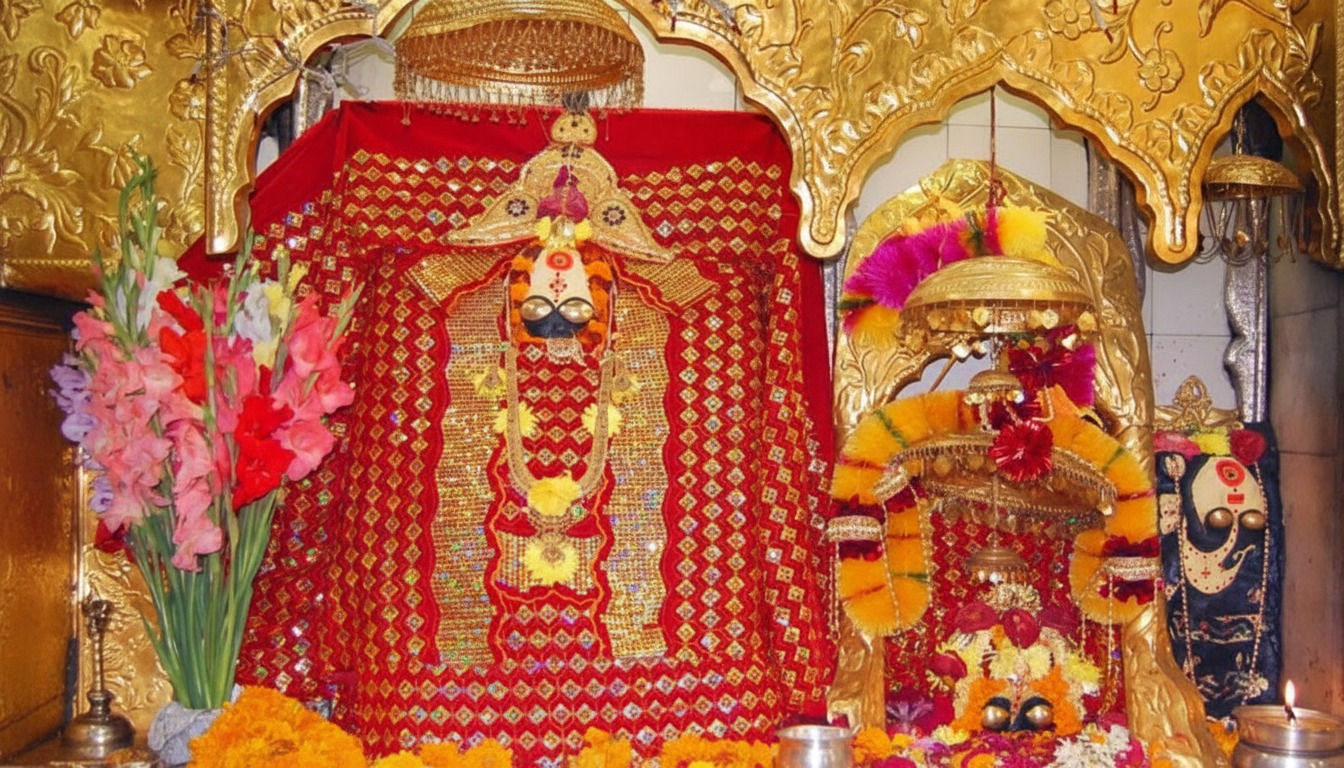
Naina Devi Temple is a major Shakti shrine in Bilaspur district of Himachal Pradesh, situated on a hill overlooking Gobind Sagar Lake. The temple is traditionally regarded as a Shakti Peetha, where the eyes of Goddess Sati are believed to have fallen.
The shrine is known for the worship of Shri Naina Bhagwati in the form of a sacred Pindi, its hilltop temple complex, Navratri fairs and a number of associated shrines and sacred places. The temple’s religious life includes daily aarti, bhog, havan and other forms of Shakta worship.
Story of Naina Devi Temple
The history of Naina Devi is preserved through both local tradition and recorded temple administration. Himachal Pradesh Tourism attributes the construction of the temple to Raja Bir Chand of Bilaspur in the 8th century. Another widely told local tradition connects the origin of the shrine with a Gujjar cattle herder named Naina, who is said to have seen a white cow repeatedly pouring milk over a stone and later received a vision identifying the stone as the goddess’s Pindi. These accounts belong to the religious and local traditions of the shrine.
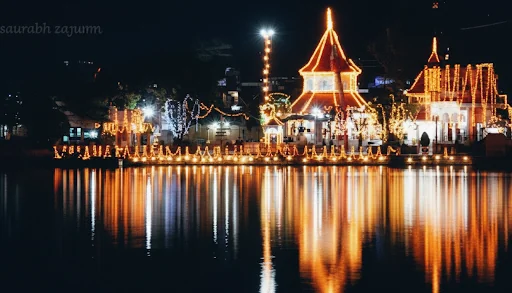
The present temple stands on the hill known as Naina Dhar and is located at an elevation of about 1,200 metres. The temple complex is built largely in marble, with the first entrance gate following a Shikhar-style form and the doors decorated with silver work. Two lions stand at the entrance to the main shrine. The setting of the temple above Gobind Sagar has also made the hill itself an important part of the pilgrimage landscape.
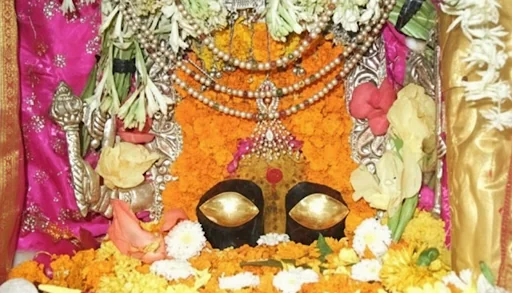
The main shrine houses the sacred form of Shri Naina Bhagwati as a Pindi marked by two prominent eyes. Another Pindi beside it is traditionally believed to have been established by the Pandavas, while Lord Ganesha is also worshipped within the main shrine. The wider complex includes shrines dedicated to Hanuman, Ek Pad Bhairav, Shiva, Mahakali and Lakshmi Narayan, along with Charan Paduka and other sacred places.
The temple complex has continued to develop under organised temple administration. The Shri Naina Devi Ji Temple Trust was established by the Himachal Pradesh Government on 17 December 1985, replacing the earlier local temple committee. Facilities such as the langar, accommodation, pilgrim services and improvements to the temple precinct have since been developed as part of the shrine’s modern administration.
What Makes Naina Devi Temple Sacred for Devotees
The Shakti Peetha tradition
Naina Devi is widely revered as a Shakti Peetha. According to the well-known Shakta tradition, after the death of Sati, Lord Shiva carried her body while Vishnu divided it into parts to restore cosmic balance. The eyes are believed to have fallen at this place, giving the goddess the name Naina Devi.
The number and details of the Shakti Peethas vary across religious texts and regional traditions. For the temple, the important point is the continuing belief that this hill is associated with the eyes of Sati and therefore with the presence of Shakti.
The Pindi and the white-cow tradition
A local origin story tells of a Gujjar boy named Naina who noticed a white cow releasing milk over a particular stone. After the occurrence continued, he is said to have seen the goddess in a dream and learned that the stone was her sacred form.
The story connects the name of Naina with the goddess and explains the traditional understanding of the Pindi worshipped at the shrine. It remains part of the local religious history of Naina Devi.
Naina Devi and Mahishasura
Another tradition connects Naina Devi with the defeat of the demon Mahishasura. In this account, the goddess fought and defeated the demon, and parts of the surrounding sacred landscape came to be associated with the events of the battle.
The temple complex and nearby sacred water places preserve several names and traditions connected with this story. These accounts are part of local religious belief rather than archaeological explanations.
Guru Gobind Singh and the Akhand Hawan Kund
The temple’s tradition also associates Guru Gobind Singh with the shrine. According to the temple’s own account, the Akhand Hawan Kund is connected with his visit and has remained an important place of worship within the complex.
The Hawan Kund continues to be used for religious ceremonies and special havans. The tradition is one of the ways in which the shrine’s history also connects with the religious landscape of the surrounding Punjab and Himachal region.
The Bhairava tradition
Ek Pad Bhairav is worshipped at the entrance of the temple complex. Bhairava is traditionally regarded as the guardian and Shiva counterpart associated with Shakti worship, and his presence forms part of the wider religious structure of the shrine.
Annual Festivals & Rituals at Naina Devi Temple, Bilaspur, Himachal Pradesh
Daily Aarti and Worship Celebrations at the Temple
The temple follows a traditional Shakta method of worship in which the daily service of the goddess is performed by hereditary priests. The ritual cycle includes aarti, offerings and the distribution of Prasad and Charanamrit to devotees.
Chaitra Navratri Celebrations at the Temple
Chaitra Navratri is one of the three major annual pilgrimage periods at Naina Devi. Special worship and a large fair are held during the festival, bringing devotees from Himachal Pradesh, Punjab and other parts of northern India.
Shravan Ashtami Mela Celebrations at the Temple
The Shravan Ashtami Mela is another major gathering at the shrine. The festival takes place during the Shravan season and is traditionally associated with a large increase in pilgrimage to the temple.
Ashwin Navratri Celebrations at the Temple
Ashwin or Sharad Navratri is one of the most important annual periods at Naina Devi. The temple remains especially active during these days, with extended visiting hours, additional arrangements and large numbers of pilgrims.
Havan and Bhog Celebrations at the Temple
Havan is an important part of worship at Naina Devi. The temple also maintains a langar and prepares Bhog as part of its daily religious and service traditions.
Sacred Places to Visit Near Naina Devi Temple
Gobind Sagar Lake : Gobind Sagar lies below the Naina Devi hills and forms an important part of the landscape around the shrine. The reservoir was created by the Bhakra Dam project and is one of Bilaspur’s major landmarks.
Bhakra Dam : Bhakra Dam is one of the major engineering landmarks near Naina Devi. The dam and the reservoir are closely connected with the modern history and geography of Bilaspur.
Anandpur Sahib : Anandpur Sahib in neighbouring Punjab is an important Sikh pilgrimage centre and is closely connected with the Naina Devi pilgrimage route. The town also has historical associations with Guru Gobind Singh.
Kaulaan Wala Toba : Kaulaan Wala Toba, also called Kaula Wala Toba, is part of the older pilgrimage route to Naina Devi. Temple tradition associates the place with bathing, offerings and the traditional foot pilgrimage towards the shrine.
Naina Devi Cave : A cave near the temple complex is associated with local traditions of meditation and penance. It forms part of the sacred landscape beyond the main shrine.
Charan Paduka and Sacred Water Places : Charan Paduka, Brahma Kapali Kund and other water places around the temple are included in the religious geography of Naina Devi. Their importance comes from the traditions associated with the goddess and the pilgrimage route.
Plan Naina Devi Temple Darshan
For current darshan timings, queue arrangements, date-specific guidance and Naman Darshan’s Guided Darshan Assistance, continue to the dedicated Naina Devi Temple Darshan page.
Common Questions About Visiting Naina Devi Temple
Visitor Information
Darshan Timing
Address
Shri Naina Devi Ji Temple, Naina Devi Ji, District Bilaspur, Himachal Pradesh 174310, India
Notable Events
8th century — Raja Bir Chand tradition – Himachal Pradesh Tourism attributes the construction of the temple to Raja Bir Chand of Bilaspur. The date forms part of the established local history of the shrine. • 17 December 1985 — Temple Trust established – The Himachal Pradesh Government established the Shri Naina Devi Ji Temple Trust under the Hindu Public Religious Institutions and Charitable Endowment framework. The Trust replaced the earlier local temple committee. • 1985 onward — Pilgrim facilities expand – The Temple Trust developed facilities including langar, accommodation, water arrangements, sanitation and other services for pilgrims. • 3 August 2008 — Naina Devi temple stampede – A major stampede at the shrine caused the deaths of 146 devotees. The tragedy became an important point in the modern history of the temple and led to increased attention to crowd movement and emergency management. • 2008 onward — Crowd-management measures strengthened – The shrine introduced additional crowd-control systems, including batch-wise movement, increased security and later command-and-control arrangements during large gatherings. • 2024 — Passenger ropeway inspected – The Shri Naina Devi Ji aerial passenger ropeway underwent its annual inspection in December 2024 as part of its safety and maintenance process. • 2025–2026 — Temple development and improvement works – The Temple Trust and Himachal Pradesh Government have continued planning and tendering for improvements to the temple complex, pilgrimage facilities, CCTV and crowd-management infrastructure, including wider development around Kaula Wala Toba and associated areas.
How to Reach the Temple
By Air: Chandigarh Airport is the nearest major airport and is approximately 100–110 kilometres from the shrine, depending on the route.
By Rail: Anandpur Sahib is the nearest convenient railway station, roughly 25–30 kilometres away. Nangal is another rail option for pilgrims travelling through Punjab.
By Road: The temple is well connected by road with Bilaspur, Chandigarh, Anandpur Sahib and other parts of Himachal Pradesh and Punjab. State transport buses and taxis are available for the journey.
From Anandpur Sahib: The temple is approximately 20 kilometres from Anandpur Sahib, with the final section of the route passing through the hills.
By Ropeway: A passenger ropeway provides an alternative approach from the lower area to the hilltop temple. The service supplements road, pedestrian and palki access and is particularly useful for pilgrims who prefer not to make the full uphill approach on foot.
Uttarkashi, Uttarakhand