
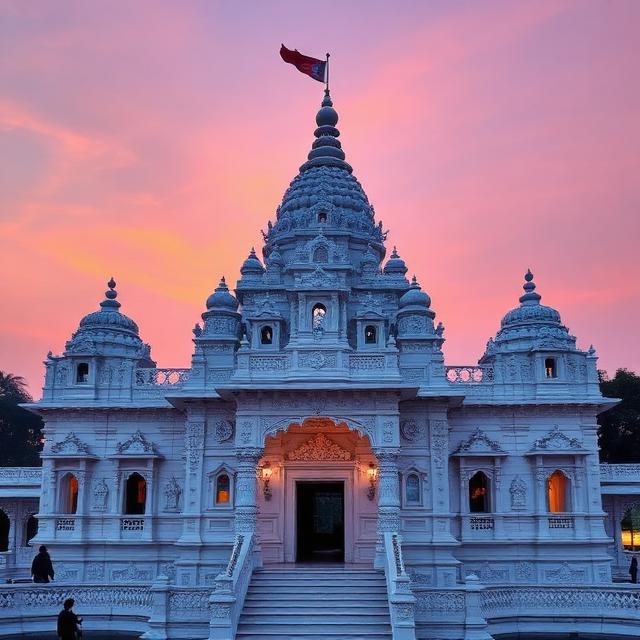
About Vindhyachal Temple, Vindhyachal, Uttar Pradesh
Vindhyachal Temple, also known as Maa Vindhyavasini Temple and Vindhyachal Dham, is dedicated to Goddess Vindhyavasini and stands on the banks of the Ganga in Vindhyachal, Mirzapur. The shrine is widely revered in Shakta tradition and is regarded as a Shakti Peetha and sacred Siddha Peetha.
Vindhyachal is also known for the Trikona Parikrama, the traditional pilgrimage circuit linking Maa Vindhyavasini, Kali Khoh and Ashtabhuja Devi. The temple's religious importance comes from this wider sacred landscape as much as from the main shrine itself.
Story of Vindhyachal Temple
The sacred identity of Vindhyachal is older than the present temple building. The Mirzapur district administration connects the worship of Vindhyavasini with traditions found in the Padma Purana and Devi Bhagavata, while the name Vindhyavasini itself refers to the goddess who resides in the Vindhya region.
The exact founding date of the present temple is not firmly established in the available government record. Later local and pilgrimage accounts describe rebuilding and renovation at different points in the temple's history, including an association with Rani Ahilyabai Holkar. These accounts are part of the later history of the shrine rather than a securely documented single foundation date.
The temple is a compact North Indian shrine centred on the sanctum of Maa Vindhyavasini. It is identified with the Nagara tradition, but the importance of the complex is not based on monumental scale. Its location beside the Ganga, its continuous worship and its connection with Kali Khoh and Ashtabhuja make the temple part of a larger sacred geography.
The surrounding pilgrimage area has changed considerably in recent years. The Vindhya Corridor has brought new circulation spaces and public infrastructure around the historic shrine, while the Uttar Pradesh Vindhya Dham Teerth Vikas Parishad now has a formal role in planning and preserving the wider heritage region.
What Makes Vindhyachal Temple Sacred for Devotees
Vindhyavasini and the Yogmaya Tradition
One of the most important traditions of Vindhyachal identifies Vindhyavasini with Yogmaya, the divine girl associated with the birth of Lord Krishna. According to the familiar account, Yogmaya was born to Nanda and Yashoda at the time Krishna was born to Devaki and Vasudeva.
When Kansa tried to kill the child, she slipped from his hands and revealed herself as the Goddess. The tradition then connects her with the Vindhya mountains, where she came to reside as Vindhyavasini, meaning the Goddess who dwells in the Vindhyas.
Vindhyachal and the Shakti Peetha Tradition
Vindhyachal is widely revered as a Shakti Peetha. Alongside this designation, local religious traditions also describe the site as a Siddha Peetha, emphasising the presence of the Goddess in her own chosen abode.
The exact descriptions of Shakti Peethas vary between religious texts and regional traditions. For that reason, the temple's Shakti Peetha identity is best presented as part of its living religious tradition rather than as a single historical account.
The Trikona Parikrama
The distinctive pilgrimage tradition of Vindhyachal is the Trikona Parikrama, which connects three major Goddess shrines: Vindhyavasini, Kali Khoh and Ashtabhuja.
In the devotional tradition associated with the circuit, the three shrines represent different aspects of the Goddess. Current temple-focused sources identify Vindhyavasini with Maha Lakshmi, Kali Khoh with Maha Kali and Ashtabhuja with Maha Saraswati.
The circuit gives Vindhyachal a different character from a pilgrimage centred on one temple alone. The Ganga, the hill shrines and the three Goddess traditions all form part of the same sacred landscape.
Vindhyavasini and Mahishasura
Some regional traditions also connect Vindhyavasini with the Goddess's victory over Mahishasura and with her choice of Vindhyachal as her abode after the battle. This forms part of the wider Shakta understanding of the Goddess as the power that protects and restores dharma.
Annual Festivals & Rituals at Vindhyachal Temple, Vindhyachal, Uttar Pradesh
Daily Worship and Aarti Celebrations at the Temple
The daily worship of Maa Vindhyavasini follows a sequence of rituals that includes Mangala Aarti, Rajbhog Aarti, Sandhya Aarti and Shayan Aarti. Darshan is organised around these rituals, so the sanctum may close or access may change while an aarti or offering is taking place. Detailed current timings belong on the dedicated Darshan page because they can change with the season, festival calendar and local administration.
Chaitra Navratri Celebrations at the Temple
Chaitra Navratri is one of the major pilgrimage seasons at Vindhyachal. The temple and surrounding town receive large numbers of devotees, and the Trikona Parikrama becomes especially active during the nine-day festival.
Sharadiya Navratri Celebrations at the Temple
Sharadiya Navratri is another major annual period for Vindhyavasini worship. The Vindhyachal area sees heavy pilgrim movement, special worship and extended arrangements around the three principal shrines.
Kajari and Kajali Traditions Celebrations at the Temple
Vindhyavasini is also associated with Kajari or Kajali traditions of the Vindhyachal region. The festival has both devotional and cultural significance and forms part of the local identity surrounding the Goddess.
Sacred Places to Visit Near Vindhyachal Temple
Kali Khoh Temple : Kali Khoh is one of the two major Goddess shrines included in the Trikona Parikrama. The temple is situated in a natural cave and is traditionally associated with Maa Kali.
Ashtabhuja Devi Temple : Ashtabhuja Devi Temple stands on a hill in the Vindhyachal region and forms the third major shrine of the Trikona Parikrama. The district administration identifies Ashtabhuja with the Goddess's eight-armed form and with the Mahasaraswati tradition.
Sita Kund and Paatal Puri : Sita Kund and the Paatal Puri cave are associated with the Ashtabhuja shrine and form part of the wider sacred landscape of Vindhyachal.
Ganga Ghats : The Ganga is central to the location and religious geography of Vindhyachal. The nearby ghats are traditionally used by pilgrims for bathing, prayer and preparation before visiting the shrines.
Vindhyachal Town : The pilgrimage town around the temple contains the lanes, markets, accommodation and religious establishments that have grown around the shrine over generations.
Plan Vindhyachal Temple Darshan
For current darshan planning, aarti schedules, queue information and Naman Darshan's Guided Darshan Assistance, continue to the dedicated Vindhyachal Temple Darshan page.
Common Questions About Visiting Vindhyachal Temple
Visitor Information
Darshan Timing
Address
Maa Vindhyavasini Temple, Vindhyachal, Mirzapur, Uttar Pradesh – 231307, India
Notable Events
Puranic and Sacred Tradition – The Mirzapur district administration records longstanding religious traditions connecting Vindhyavasini with the Padma Purana and Devi Bhagavata and identifies Vindhyachal as an established centre of Goddess worship. • 2018 — Vindhyachal Navratri Fair Gains State-Level Status – The Vindhyachal Navratri fair was designated a state-level fair in 2018, increasing the administrative focus on crowd management and arrangements during the major Navratri seasons. • 2021 — Vindhya Dham Teerth Vikas Parishad Act – The Uttar Pradesh Vindhya Dham Teerth Vikas Parishad Act, 2021 established a statutory body responsible for planning, heritage preservation and development across the Vindhyachal region. • 2025 — Modern Visitor Infrastructure – New public amenities have been added around the Vindhya Corridor. In March 2025, free Wi-Fi was launched at the corridor as part of the wider development of the pilgrimage area. • 2026 — Special Navratri Visitor Measures – During Chaitra Navratri 2026, authorities temporarily stopped Sparsh Darshan and extended public access around the daily aarti schedule to manage the large festival crowds. Such measures illustrate why festival-day guidance should always be checked separately.
How to Reach the Temple
By Rail: Vindhyachal Railway Station, code BDL, is the nearest station and is approximately 1 kilometre from Maa Vindhyavasini Temple according to the Mirzapur district administration. Mirzapur Railway Station, code MZP, is about 9 kilometres away and offers another rail option.
By Air: Lal Bahadur Shastri International Airport at Babatpur, Varanasi, is the nearest major airport, approximately 72 kilometres from the temple.
By Road: Vindhyachal is connected by road with Mirzapur, Varanasi and nearby cities. The Mirzapur district administration places the temple at approximately 63 kilometres from Varanasi by road.
Within Vindhyachal: The temple area is a busy pilgrimage neighbourhood. Local autos, taxis and other local transport are commonly used for the wider Trikona Parikrama and for reaching Kali Khoh and Ashtabhuja.
Srirangam, Tiruchirappalli, Tamil Nadu