
About Palani Murugan Temple, Palani, Tamil Nadu
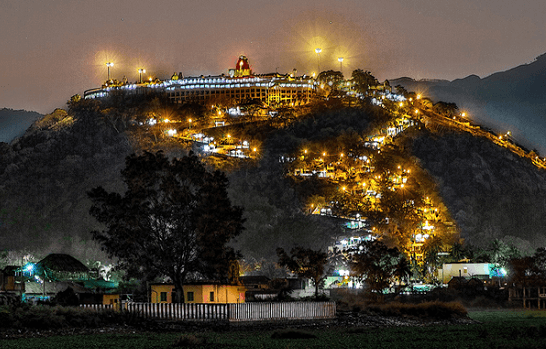
Palani Murugan Temple, also known as Arulmigu Dandayudhapani Swami Temple, is dedicated to Lord Murugan in his Dandayudhapani form. The hill shrine at Palani is one of the Arupadai Veedu, the six traditional abodes of Murugan, and stands on Sivagiri Hill above the town.
The temple is known for the ascetic form of Palani Andavar, the traditions of Siddhar Bhogar and Idumban, the kavadi pilgrimage, Panchamirtham and festivals such as Thai Poosam and Panguni Uthiram. Together with the older temple at Tiru Avinankudi at the foot of the hill, these traditions form an important part of Palani's religious history.
Story of Palani Murugan Temple
Palani has a long association with Murugan worship. Tiru Avinankudi is mentioned in Tamil literary tradition, including the Tirumurugatrupadai, and the sacred hill of Palani became an important centre of Murugan worship. The present hill temple developed through several periods of patronage and renovation. Traditional accounts associate an early reconstruction with a Chera ruler, while inscriptions and historical records point to later Chola and Pandya contributions to the temple.
The temple walls preserve inscriptions connected with royal grants, particularly from the Pandya period. The temple was subsequently patronised during the Vijayanagara and Nayaka periods, and different parts of the complex were expanded or renovated over time. The 15th-century saint-poet Arunagirinathar also visited Palani and praised Murugan in his Tiruppugazh, adding another important layer to the temple's devotional history.
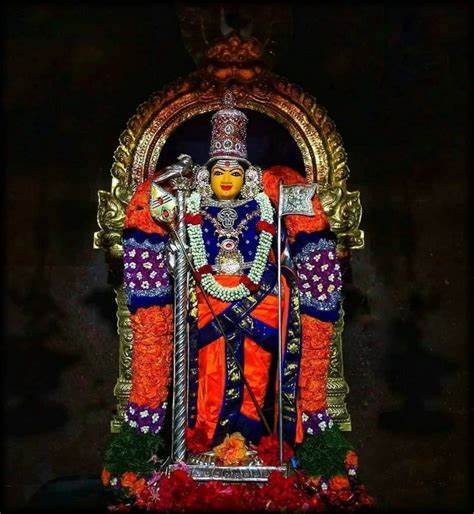
The main deity is Dandayudhapani Swami, the name referring to Murugan holding the dhandam, or staff. At Palani, Murugan is represented as a young renunciate, without the ornaments and royal appearance commonly seen in other forms of the deity. The temple tradition associates the principal image with Siddhar Bhogar and describes it as being made from Navapashanam, a traditional amalgam of nine substances. This material and its medicinal associations belong to the religious tradition of the shrine and should not be treated as an established scientific description.
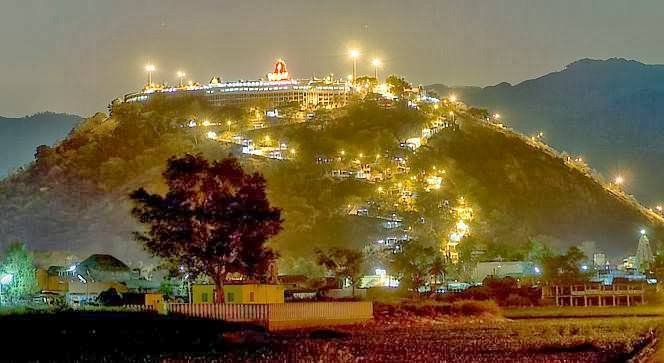
The hill temple stands on Sivagiri, the higher of the two sacred hills of Palani. Its sanctum and surrounding structures show layers of South Indian temple architecture, with old stone work, pillared spaces and inscriptions around the inner precincts. A golden Vimanam rises over the sanctum, while the complex also contains the shrine of Bhogar and other associated shrines. Traditional access to the summit was by the rock-cut steps and the Yanai Padha, or elephant path; today, pilgrims can also use the winch and rope-car services when they are operating.
What Makes Palani Murugan Temple Sacred for Devotees
The Jnana Pazham and the name Palani
The best-known tradition explaining Palani's sacred identity begins with the Jnana Pazham, the fruit of wisdom. According to the story, Sage Narada brought the fruit to Lord Shiva and Goddess Parvati, who decided that it would be given to whichever of their sons, Ganesha or Murugan, could first circle the world.
Murugan set out on his peacock, while Ganesha circumambulated his parents, understanding them as the world itself. Ganesha therefore received the fruit. Murugan, angered by the result, left Kailash and came to Tiru Avinankudi and later to the hill above it.
The tradition says that Shiva consoled Murugan by declaring “Pazham Nee” — You are the fruit. The phrase is traditionally connected with the name Pazhani or Palani and with the understanding of the deity as a form of wisdom and renunciation.
Idumban and the origin of Kavadi
Another important Palani tradition concerns Idumban, the disciple of Sage Agastya. Agastya is said to have asked Idumban to carry the two hills, Sivagiri and Sakthigiri, southwards using a carrying frame balanced across his shoulders.
When Idumban stopped at Palani, he found that one of the hills could no longer be moved because Murugan had chosen to remain there. A confrontation followed, and Idumban was defeated before being restored to life.
According to the tradition, Idumban asked that devotees carrying offerings in the same manner should receive Murugan's grace and that he should remain as a guardian of the hill. The practice of carrying offerings on a kavadi consequently became closely associated with Palani and later spread widely in Murugan worship.
Siddhar Bhogar
Palani tradition gives an important place to Siddhar Bhogar, who is credited with creating and consecrating the main image of Dandayudhapani. A shrine dedicated to Bhogar stands within the hill temple complex.
Traditions concerning Bhogar's cave, meditation and continued spiritual presence belong to the sacred history of Palani. They are part of the temple's living religious tradition rather than archaeological claims.
Murugan as Dandayudhapani
The form of Murugan worshipped at the summit is especially important to Palani's identity. Dandayudhapani stands with a staff and very little ornamentation, representing the renunciant form of the deity.
This form is traditionally understood as the result of Murugan withdrawing from the contest over the fruit of wisdom and choosing a life of simplicity. The hill, therefore, is closely associated with renunciation, wisdom and detachment in Murugan worship.
Tonsuring and Kavadi worship
Tonsuring is one of the longstanding vows observed by devotees at Palani. The act of giving up one's hair is connected with humility and offering.
Kavadi worship is another distinctive practice. Devotees may undertake a Pada Yatra and carry decorated kavadi or theertha kavadi with sacred water as part of a vow. These practices are especially visible during the major festival seasons.
Annual Festivals & Rituals at Palani Murugan Temple, Palani, Tamil Nadu
Daily Pujas and Alankaram Celebrations at the Temple
The hill temple follows a sequence of daily worship through six principal pujas. The deity receives different forms of alankaram during the day, including the traditional ascetic, child, priestly and royal forms associated with the different services.
Abhishekam and Panchamirtham Celebrations at the Temple
Abhishekam is an important part of worship at Palani. The temple is also closely associated with Panchamirtham, a traditional prasadam prepared by the Devasthanam and distributed through its authorised facilities. The temple itself cautions devotees against purchasing imitation Panchamirtham or puja materials from unauthorised sellers.
Thai Poosam Celebrations at the Temple
Thai Poosam is one of Palani's principal festivals and is observed over a ten-day period. Pilgrims arrive from different parts of Tamil Nadu, many undertaking Pada Yatra and carrying kavadi. The festival includes processions, special worship and a temple-car procession, with the main Poosam day forming the central observance.
Panguni Uthiram Celebrations at the Temple
Panguni Uthiram is another major ten-day festival at Palani. Devotees carry kavadi and theertha kavadi, while the festival includes processions of Muttukumara Swami with Valli and Deivanai. The seventh day is associated with the major car festival, and the festival's traditional music and rural devotional practices form an important part of the celebrations.
Kanda Sashti Celebrations at the Temple
Kanda Sashti is dedicated to Murugan's victory over Surapadman. The festival is associated with special worship and the Soora Samharam observance, commemorating the defeat of the demon in Murugan tradition.
Vaikasi Visakam Celebrations at the Temple
Vaikasi Visakam is celebrated during the Tamil month of Vaikasi and is traditionally associated with Murugan. At Palani, it forms part of the annual festival calendar and is marked by special worship and processional observances.
Karthigai Deepam Celebrations at the Temple
Karthigai is another important observance in the Palani calendar. The festival period brings special worship and devotional activity to the hill temple and the other temples associated with Palani.
Sacred Places to Visit Near Palani Murugan Temple
Tiru Avinankudi Temple : Tiru Avinankudi stands at the foot of Sivagiri and is traditionally regarded as one of the important Murugan shrines of Palani. It forms part of the older sacred geography of the pilgrimage, before the ascent to the hill temple.
Idumban Temple : The shrine of Idumban is associated with the traditional origin of kavadi worship. It is located on the hill route and reflects the story of Idumban's role in bringing the two sacred hills to the south.
Bhogar Samadhi : The Bhogar shrine and samadhi tradition form an important part of the hill temple. Devotees associate this part of the complex with the Siddhar credited with creating the Palani deity.
Periyanayaki Amman Temple : Periyanayaki Amman Temple in Palani is an important associated shrine dedicated to Goddess Parvati. It forms part of the wider temple network administered around the Palani pilgrimage centre.
Saravana Poigai : Saravana Poigai is a sacred water body associated with Palani's religious geography and the worship of Murugan.
Palani Hills : The Palani Hills form the natural setting around the temple town. From the summit of Sivagiri, the temple precinct overlooks the surrounding hills, fields and Palani town.
Plan Palani Murugan Temple Darshan
For current darshan planning, queue information, applicable temple services and Naman Darshan's Guided Darshan Assistance, continue to the dedicated Palani Murugan Temple Darshan page.
Common Questions About Visiting Palani Murugan Temple
Visitor Information
Darshan Timing
Address
Arulmigu Dhandayuthapani Swamy Temple, North Giri Street, Palani, Dindigul District, Tamil Nadu – 624601, India
Notable Events
Sangam period — Tiru Avinankudi in Tamil literary tradition – Tiru Avinankudi is associated with early Tamil devotional literature describing the sacred places of Murugan. • Medieval period — Development of the hill shrine – Temple tradition associates the early hill shrine with Chera patronage, with later rulers contributing to its expansion. The exact chronology of the earliest construction is not uniform across sources. • 10th–13th centuries — Chola and Pandya patronage – Historical records and inscriptions indicate Chola and Pandya involvement in the temple's development, including documented Pandya grants. • 15th century — Arunagirinathar and Tiruppugazh – Arunagirinathar's Murugan hymns added an important devotional literary layer to Palani's religious history. • Later medieval period — Vijayanagara and Nayaka development – The temple and the surrounding region received further patronage and architectural development during later South Indian kingdoms. • 20th century — Modern hill access – Winch services were introduced in stages to make the hill temple easier to reach, followed later by rope-car access.
How to Reach the Temple
By Air: Coimbatore International Airport is the nearest major airport listed by Tamil Nadu Tourism, approximately 111 kilometres from Palani.
By Rail: Palani Railway Station is the nearest railway station and is approximately 1 kilometre from the town's central temple area.
By Road: Palani is connected by road with Coimbatore, Madurai, Dindigul and other major towns in Tamil Nadu. Regular buses and taxis serve the town.
Within Palani: The hill temple can be approached on foot by the steps or traditional elephant path. Winch and rope-car services provide alternative access when operational.
Udupi, Karnataka