
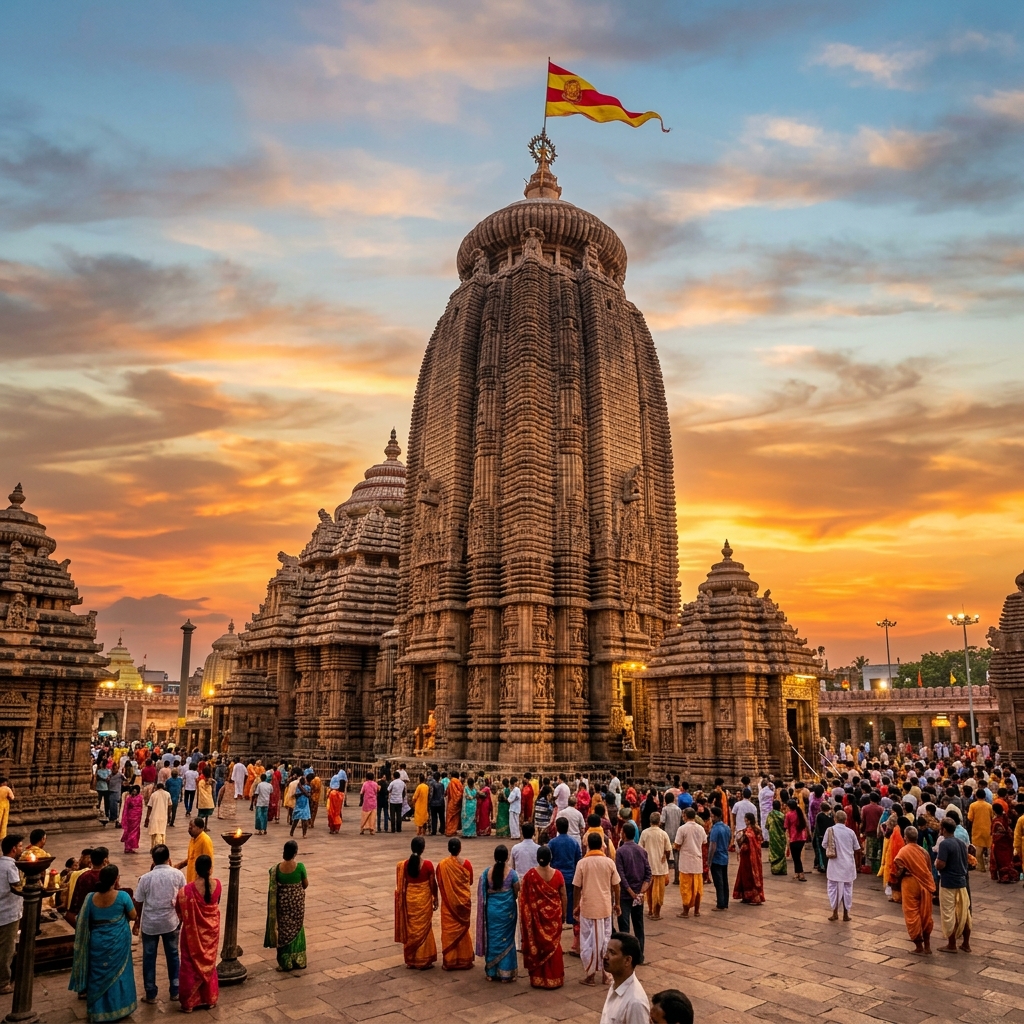
Jagannath Puri Darshan Advisory – Essential Yatra Guidelines
Personalized crowd routing, Rath Yatra safety zones, official Mahaprasad guidance, and dedicated on-ground coordination.
Overview & Heritage of Puri Dham
Jagannath Puri is one of India’s four sacred Char Dham pilgrimage sites. Located on the golden coast of the Bay of Bengal in Odisha, it is the holy seat of Lord Jagannath (the Lord of the Universe), worshipped alongside his brother Balabhadra and sister Subhadra.
Unlike other temples where deities are made of stone or metal, the idols here are crafted from sacred Neem wood (Daru Devta). The city is world-renowned for its spiritual energy, the massive Rath Yatra, and the mystery of the Mahaprasad.
Spiritual Significance
- Nilachala Dham: The temple represents the heart of spiritual consciousness.
- The Living Lord: The Lord eats 56 varieties of food (Chappan Bhog) daily.
- Mahaprasad: Cooked in earthen pots; said to be supervised by Goddess Lakshmi.
Note: This information is advisory and aligned with official sources. Final entry, timings, and policies are subject to local administration and temple rules. We do not promise queue-jumping or guaranteed entry.
History & Mysteries
The Legend of Nilamadhav
Before the grand temple existed, Lord Jagannath was worshipped in secret as Nilamadhav by a tribal chief. King Indradyumna later discovered the deity and was instructed by a divine voice to carve new idols from a sacred log found floating in the sea.
Nabakalebara: The Ritual of Rebirth
Every 12 to 19 years, the old idols are buried, and new ones are carved from specific Neem trees. During a secret midnight ceremony, a mysterious “Life Force” (Brahma Padartha) is transferred from the old idol to the new one by a blindfolded priest.
The Living Kitchen
The temple kitchen uses a unique cooking method where seven earthen pots are stacked over a single fire, and the top-most pot cooks first—a divine defiance of physics.
Experience divine ease with Guided Darshan Assistance
A knowledgeable Pandit Ji will accompany you, guide you through the temple, and share insights about the temple’s history and significance, prioritizing tranquility and reverence.
Available Yatra Packages
Puri Divine Darshan
- Day 1: Arrival, Jagannath Darshan, and Puri Beach.
- Day 2: Konark Sun Temple and Chandrabhaga Beach.
- Day 3: Gundicha Temple and local shopping.
Odisha Coastal Heritage
- Detailed Jagannath Darshan and Mahaprasad experience.
- Excursion to Chilika Lake (Dolphin spotting).
- Visit Konark Sun Temple and Raghurajpur art village.
- Final prayers at Sakshigopal Temple.
Note: This information is advisory and aligned with official sources. Final entry, timings, and policies are subject to local administration and temple rules. We do not promise queue-jumping or guaranteed entry.