
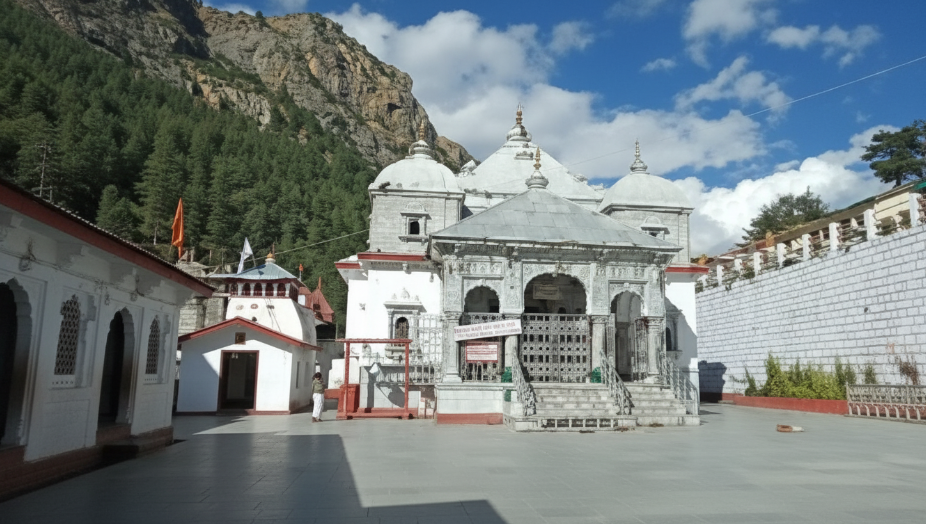
About Gangotri Temple, Gangotri, Uttarakhand
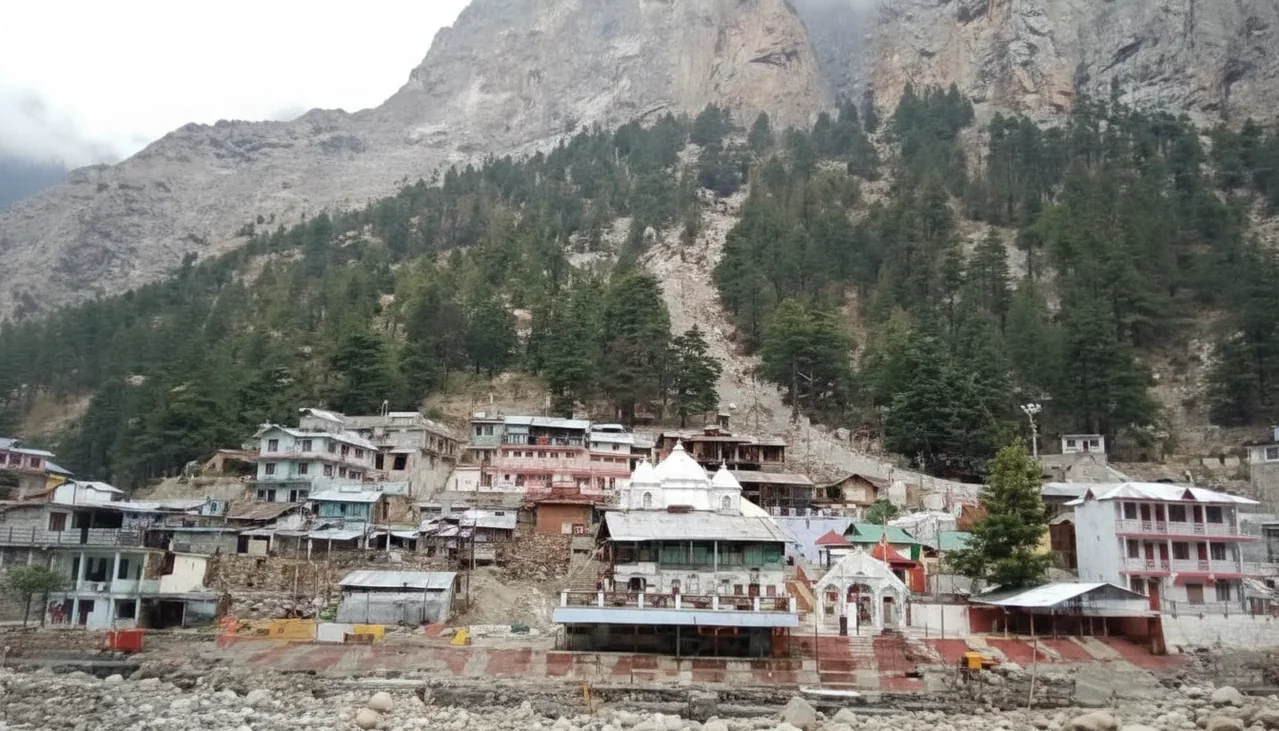
Gangotri Temple is dedicated to Goddess Ganga and is one of the four shrines of the Char Dham pilgrimage in Uttarakhand. The temple stands in Gangotri on the Bhagirathi River, in the high Himalayan valley of Uttarkashi.
Gangotri is traditionally associated with the descent of Ganga to earth through the penance of King Bhagirath. The physical source of the Bhagirathi is at Gaumukh, but Gangotri remains the principal sacred centre where Goddess Ganga is worshipped.
Story of Gangotri Temple
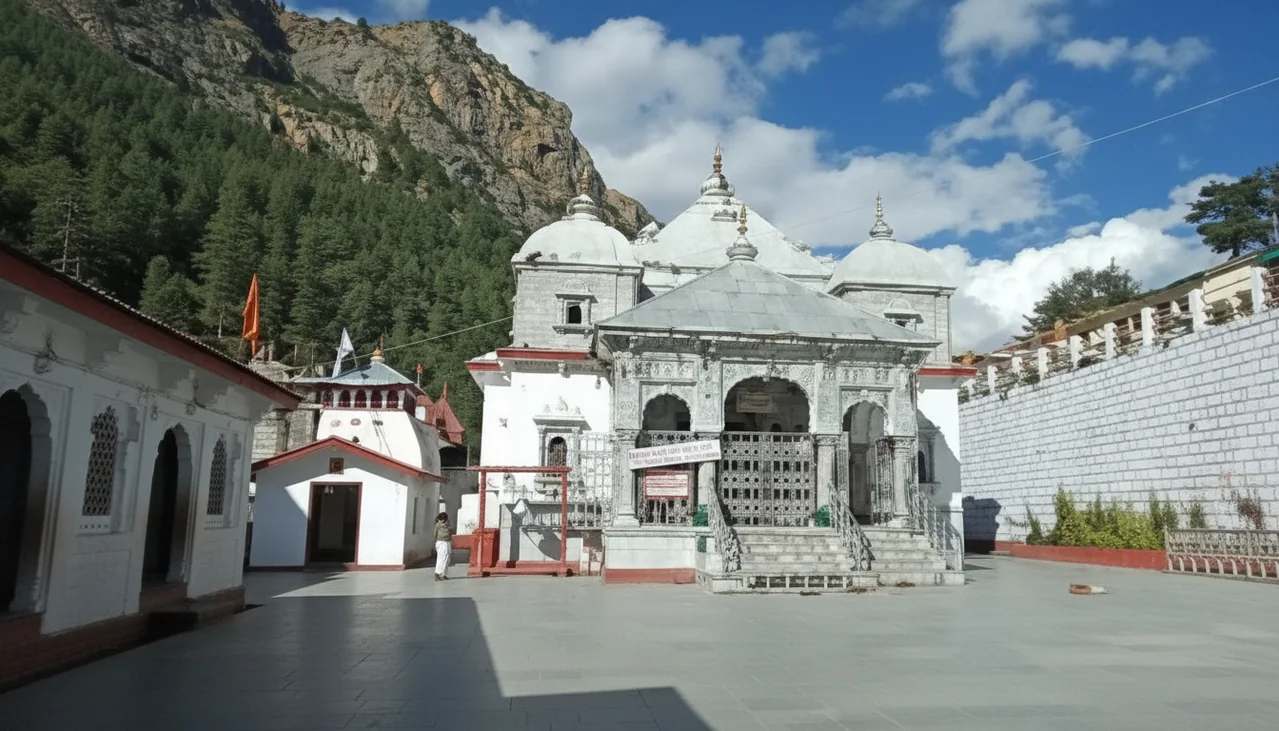
The sacred importance of Gangotri predates the present temple building. The site is connected with the worship of Ganga and with the long-standing tradition of Bhagirath's penance. The temple that stands today is generally attributed to the Gorkha general Amar Singh Thapa, with later renovation associated with the Maharaja of Jaipur. Historical sources differ on the precise stages of construction and restoration, but the present shrine belongs to the later history of Gangotri's established pilgrimage tradition.
The temple is a comparatively small white-stone shrine set against the Himalayan landscape. Its form follows the North Indian hill-temple tradition, with a simple entrance, mandapa and shikhara rather than the large gopurams seen in southern temples. Its position beside the Bhagirathi, with Bhagirath Shila and other sacred sites nearby, makes the surrounding landscape part of the temple's religious setting rather than merely its backdrop.
What Makes Gangotri Temple Sacred for Devotees
The Descent of Ganga
According to Hindu tradition, King Sagara's sons were reduced to ashes and could attain release only when the sacred Ganga came down to earth. King Bhagirath performed severe penance to bring the river from heaven. When Ganga descended, Lord Shiva received her in his matted hair and released her to earth in a controlled flow.
Gangotri is traditionally identified with this descent of Ganga. The Bhagirathi flows from the Gangotri region, while the river takes the name Ganga after the Bhagirathi meets the Alaknanda at Devprayag.
Bhagirath Shila
Bhagirath Shila is a sacred stone near the temple associated with the penance of King Bhagirath. For pilgrims, it gives a particular place to a story that otherwise belongs to the wider mythology of the Ganga.
Jalmagna Shivling
A naturally formed Shivling lies in the Bhagirathi near Gangotri and remains submerged during the higher-water months. It becomes visible when the river level falls, especially during winter. Local tradition associates this place with Lord Shiva receiving Ganga.
The Winter Abode at Mukhba
Gangotri's worship continues even when the main temple is closed for winter. After the annual closure, the processional form of Goddess Ganga is taken to Mukhba, near Harsil, where worship continues during the winter months.
In spring, the deity returns to Gangotri in a traditional procession for the reopening of the temple on Akshaya Tritiya. The Indira Gandhi National Centre for the Arts has documented this journey as a longstanding religious and cultural tradition involving the villages, priests, musicians and devotees of the Bhagirathi valley.
The Pandava Tradition
Another local tradition associates Gangotri with the Pandavas, who are said to have performed a Deva Yajna here after the Mahabharata war. This belongs to the wider sacred tradition of the region rather than to the documented history of the temple.
Annual Festivals & Rituals at Gangotri Temple, Gangotri, Uttarakhand
Daily Worship and Ganga Aarti Celebrations at the Temple
Daily worship at Gangotri centres on Goddess Ganga. Morning worship and Aarti are followed by offerings and Bhog, while evening worship is accompanied by Ganga Aarti on the banks of the Bhagirathi. The exact daily schedule can vary with temple arrangements and special occasions.
Akshaya Tritiya Celebrations at the Temple
Akshaya Tritiya marks the reopening of Gangotri Temple after winter. The idol of Goddess Ganga returns from Mukhba in a ceremonial procession, followed by the reopening of the temple for the new pilgrimage season.
Ganga Dussehra Celebrations at the Temple
Ganga Dussehra is associated with the descent of Ganga to earth. At Gangotri, the festival brings special worship of the river and rituals connected with King Bhagirath and the story of Ganga's arrival on earth.
Janmashtami Celebrations at the Temple
Janmashtami is also observed at Gangotri with special worship. Although the temple is dedicated to Goddess Ganga, the festival forms part of the wider Hindu religious calendar followed at the shrine.
Vijayadashami Celebrations at the Temple
Vijayadashami is marked with special puja at Gangotri. It also falls within the closing phase of the annual pilgrimage season and the transition towards the winter period.
Diwali and the Winter Departure Celebrations at the Temple
Diwali marks the closing period of Gangotri Temple for the winter season. The processional form of Goddess Ganga is then carried from Gangotri to Mukhba, where her worship continues until the following spring.
Sacred Places to Visit Near Gangotri Temple
Bhagirath Shila : Bhagirath Shila is the sacred rock associated with King Bhagirath's penance. It is located close to the temple and forms an important part of the traditional Gangotri pilgrimage.
Surya Kund and Gauri Kund : Surya Kund and Gauri Kund are natural water formations near the temple. The Bhagirathi creates a dramatic waterfall at Surya Kund, while both sites are treated as sacred places in the local pilgrimage landscape.
Jalmagna Shivling : The submerged Shivling in the Bhagirathi is one of Gangotri's notable sacred sites. It is generally visible only when the river level falls.
Mukhba : Mukhba is the winter seat of Goddess Ganga. When Gangotri closes for winter, the deity is brought here and worshipped until the annual return procession.
Gaumukh : Gaumukh is the glacial source of the Bhagirathi in the Gangotri Glacier. It lies about 19 kilometres from Gangotri and is reached by trek rather than by road. For pilgrimage purposes, it is important to distinguish Gaumukh as the physical source of the river from Gangotri as the sacred temple centre of Ganga worship.
Harsil : Harsil is a Himalayan settlement on the route to Gangotri and is closely connected with Mukhba and the winter tradition of Goddess Ganga. It also serves as an important base in the upper Bhagirathi valley.
Plan Gangotri Temple Darshan
For current darshan planning, temple entry guidance, date-specific timings and Naman Darshan's Guided Darshan Assistance, continue to the dedicated Gangotri Temple Darshan page.
Common Questions About Visiting Gangotri Temple
Visitor Information
Darshan Timing
Address
Shri Gangotri Dham Temple, Gangotri, Uttarkashi district, Uttarakhand - 249137, India
Notable Events
18th century - Temple construction associated with Amar Singh Thapa – The Gangotri shrine is generally attributed to the Gorkha general Amar Singh Thapa, who established the temple structure at the sacred site. • 19th and early 20th centuries - Later renovation – The temple underwent later restoration, with official Uttarakhand sources associating the renovation with the Maharaja of Jaipur. • 1923 - Restoration recorded as completed – Historical material cited in Uttarakhand High Court proceedings records the renovation of Gangotri Dham as having been completed in 1923. • 1939 - Temple management rules – The Tehri State introduced formal rules for the management of the Gangotri temple, marking an important stage in the institutional history of the shrine. • Annual winter cycle - Mukhba tradition – After the winter closure, Goddess Ganga is taken to Mukhba, where worship continues until the traditional return to Gangotri in spring. • 2026 - Gangotri Dham season – The official Uttarakhand Char Dham registration portal lists 19 April 2026 as the opening date for Gangotri Dham.
How to Reach the Temple
By air: Jolly Grant Airport in Dehradun is the nearest major airport, roughly 250 kilometres from Gangotri. The remaining journey is by road through the Himalayan route.
By rail: Rishikesh is the nearest major railway station, approximately 230 kilometres away according to Uttarakhand Tourism. From Rishikesh, continue by road towards Uttarkashi and Gangotri.
By road: Gangotri is connected by a motorable road from Rishikesh through Uttarkashi and Harsil. Buses and taxis operate on the route, subject to seasonal and weather conditions.
From Gangotri to Gaumukh: Gaumukh, the physical source of the Bhagirathi, is reached by trekking. Uttarakhand Tourism places the trek at about 19 kilometres from Gangotri through Gangotri National Park.
Within Gangotri: The temple, Bhagirathi ghats and several nearby sacred places are within the Gangotri settlement and can be covered on foot. Conditions and pedestrian arrangements may change during crowded festival periods.
SEO Title Trinetra Ganesh Temple: History, Legend, Festivals & Guide
Meta Description Explore Trinetra Ganesh Temple in Ranthambore Fort, its history, three-eyed Ganesha, family shrine, wedding-invitation tradition, festivals and visitor guide.
Ranthambore, Sawai Madhopur, Rajasthan