
About Belur Math, Howrah, West Bengal
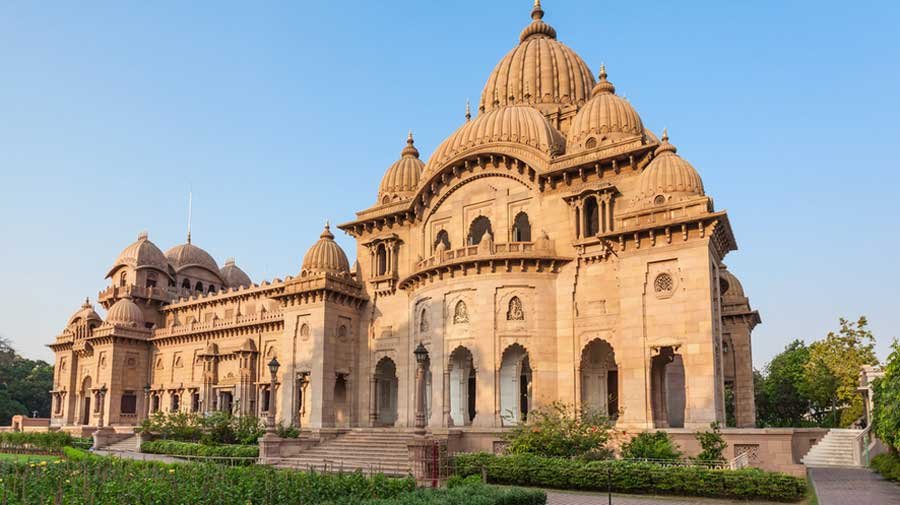
Belur Math is the headquarters of the Ramakrishna Math and Ramakrishna Mission on the western bank of the Hooghly River in Howrah, West Bengal. The campus was established by Swami Vivekananda as the permanent monastery of the Ramakrishna Order and became the centre from which the Ramakrishna movement developed.
The main Sri Ramakrishna Temple stands at the heart of the campus, along with temples dedicated to Sri Sarada Devi, Swami Vivekananda and Swami Brahmananda. The Math is also known for its Old Shrine, Swamiji's Room, Ramakrishna Museum, Ganga ghat and the distinctive architecture of the main temple.
Story of Belur Math
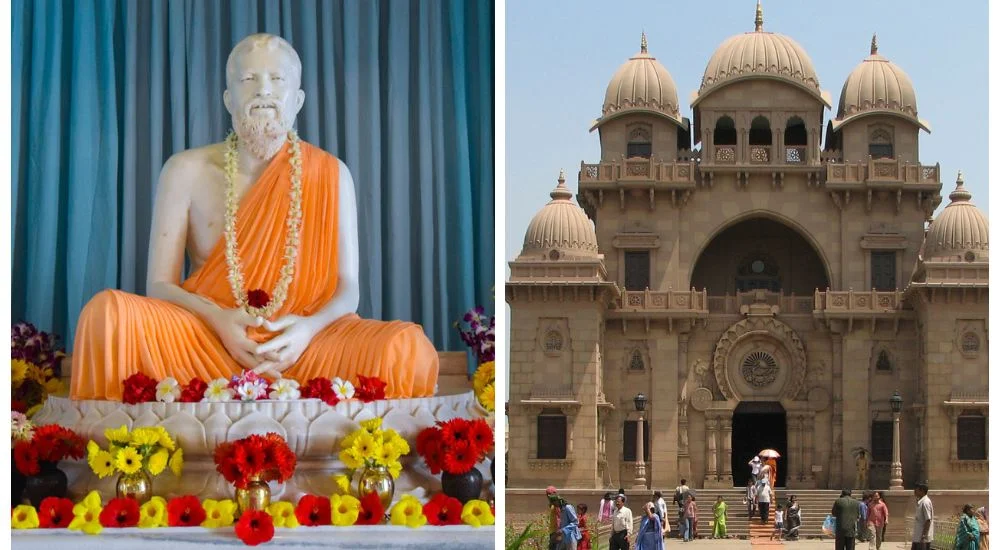
Belur Math grew out of the monastic order that began after the passing of Sri Ramakrishna. Swami Vivekananda founded the Ramakrishna Mission in 1897 and soon looked for a permanent site for the monastery. The Belur property came into the Order's possession in early 1898, and on 9 December 1898 the monastery was shifted from Nilambar Mukherjee's Garden House to the new site on the Ganga.
Swami Vivekananda wanted a permanent temple for Sri Ramakrishna and had already given thought to its design before his death in 1902. The foundation stone was first laid in 1929, and the foundation at the present site was laid by Swami Vijnanananda in 1935. The present Sri Ramakrishna Temple was completed and consecrated on 14 January 1938, on Makara Sankranti.
The architecture of the temple reflects the idea behind the Ramakrishna movement. The sanctum and the large prayer hall are connected as one continuous space, while the building combines traditional Hindu temple forms with features associated with Buddhist, Christian and Islamic architecture. The entrance, domes, arches, balconies, pillars and circumambulatory passage bring together several architectural influences without turning the building into a copy of any one tradition.
The wider campus developed around this central shrine. The temple of Sri Sarada Devi was consecrated in 1921, and the temples of Swami Vivekananda and Swami Brahmananda were dedicated in 1924 on the places associated with their cremation. The Old Shrine, where Sri Ramakrishna was worshipped before the present temple was completed, and Swamiji's Room preserve an earlier layer of the Math's history.
What Makes Belur Math Sacred for Devotees
Belur Math is closely connected with the teaching of Sri Ramakrishna that different religious paths can lead to the same spiritual truth. Swami Vivekananda gave this idea an institutional form through the Ramakrishna Math and Ramakrishna Mission, with spiritual practice placed alongside service to society.
The architectural design of the Sri Ramakrishna Temple follows the same principle. Swami Vivekananda wanted the building to bring together important features from different religious traditions so that the temple itself would express harmony rather than separation. The result is a structure whose architectural language changes from one part of the building to another while remaining a single temple.
Belur Math also gives a special place to the idea of service. The Ramakrishna Mission describes its work in education, healthcare, relief, rural development, cultural activity and other forms of public service as expressions of its spiritual ideals. This connection between worship and service is central to understanding why Belur Math functions as both a monastery and the headquarters of a worldwide service organisation.
The campus contains another layer of sacred memory through the Old Shrine, the Math courtyard, Swamiji's Room and the memorial temples. These places are valued not only for their buildings but because of their direct connection with the lives of the first generation of the Ramakrishna Order.
Annual Festivals & Rituals at Belur Math, Howrah, West Bengal
Daily Worship and Arati Celebrations at the Temple
Regular worship is conducted in the principal shrines of the campus. Evening worship at Sri Ramakrishna Temple is especially important, and the official site publishes the Sandhya Arati schedule separately because the time changes through the year. After the evening aratrikam bell, devotees are allowed to sit in Sri Ramakrishna Temple only.
Sri Ramakrishna Jayanti Celebrations at the Temple
The birth anniversary of Sri Ramakrishna is one of the major annual observances at Belur Math. Special worship, religious programmes, cultural events and distribution of prasad take place around the celebration.
Durga Puja and Kumari Puja Celebrations at the Temple
Durga Puja has been celebrated at Belur Math since 1901, when Swami Vivekananda introduced image worship of the Divine Mother at the Math. Kumari Puja became an important part of the observance, and the traditional animal sacrifice is not performed at Belur Math; a banana is offered symbolically instead.
Swami Vivekananda Jayanti Celebrations at the Temple
Swami Vivekananda's birthday is marked with special worship at his temple, Vedic chanting, devotional programmes, religious talks and distribution of prasad. The exact programme is published for each year's celebration.
Sri Sarada Devi Jayanti Celebrations at the Temple
The birthday of Holy Mother Sri Sarada Devi is observed with special worship and programmes at her temple. The date follows the traditional calendar used by Belur Math.
Kali Puja, Janmashtami and Shivaratri Celebrations at the Temple
Belur Math also observes Kali Puja, Sri Krishna Janmashtami and Shivaratri, along with the birth anniversaries of other direct disciples of Sri Ramakrishna. The annual festival calendar is published by Belur Math and should be checked for the current year's dates.
Christmas Eve Celebrations at the Temple
Christmas Eve is observed at Belur Math with devotional singing, carols and readings from the Bible. The observance forms part of the Math's wider practice of recognising spiritual traditions beyond its own immediate institutional setting.
Sacred Places to Visit Near Belur Math
Belur Math is not a temple with a single presiding deity. It is a monastic and pilgrimage complex centred on the memory and teachings of Sri Ramakrishna and the lives of Sri Sarada Devi, Swami Vivekananda and their monastic disciples.
Sri Ramakrishna Temple : The main temple contains a full-size marble image of Sri Ramakrishna seated on a lotus. His sacred relics are preserved within the marble altar. The sanctum also contains a small shrine of Baneshvara Shiva and a niche associated with the sacred dust of Holy Mother's feet.
Sri Sarada Devi Temple : The temple of Holy Mother Sri Sarada Devi stands close to the Ganga. It was built on the spot where her mortal remains were consigned to the flames and was consecrated in 1921.
Swami Vivekananda Temple : This temple stands at the spot where Swami Vivekananda's mortal remains were cremated in 1902. The shrine was dedicated in 1924 and has an upper chamber containing the Bengali form of the sacred syllable Om. The nearby bel tree is associated with the place where Swamiji used to sit.
Swami Brahmananda Temple : The temple dedicated to Swami Brahmananda stands on the site of his cremation and was dedicated in 1924. Swami Brahmananda was a direct disciple of Sri Ramakrishna and the first president of the Ramakrishna Order.
Old Shrine : Before the present Sri Ramakrishna Temple was completed, worship of Sri Ramakrishna continued in the Old Shrine. His sacred relics were kept there, and the shrine remained in use until the new temple was opened in 1938. The building also preserves the room known as Mahapurushji's Room.
Swamiji's Room : The room where Swami Vivekananda lived and worked during his final years is preserved at Belur Math. His personal belongings, photographs and articles associated with his life are displayed here, making it one of the important historical places within the campus.
Ramakrishna Sangraha Mandira : The museum presents the lives of Sri Ramakrishna, Sri Sarada Devi, Swami Vivekananda and the wider Ramakrishna movement through preserved objects, manuscripts, reconstructions and displays. The first museum opened in 1994, while the present museum and archives building was formally opened in 2001.
Dakshineswar Kali Temple : Dakshineswar Kali Temple stands on the eastern bank of the Hooghly and is closely connected with the life of Sri Ramakrishna. Belur Math and Dakshineswar are commonly visited together because of their direct connection within the Ramakrishna tradition.
Baranagar Math : Baranagar Math was the earliest monastery of the Ramakrishna Order after Sri Ramakrishna's passing and therefore provides historical context for the development of the institution that later moved to Belur.
Old Math, Nilambar Mukherjee's Garden House : The Old Math lies about a kilometre south of the main Belur Math complex. It served as an early monastery of the Ramakrishna Order and is associated with visits by Sri Sarada Devi, Swami Vivekananda and other direct disciples.
Howrah Bridge : Howrah Bridge is one of the principal landmarks of Kolkata and forms part of the wider riverfront landscape connecting Kolkata and Howrah.
Acharya Jagadish Chandra Bose Indian Botanic Garden : The Indian Botanic Garden at Shibpur is another major attraction in Howrah. It offers a different setting from Belur Math and can be combined with a broader visit to the district.
Plan Belur Math Darshan
For current darshan planning, visiting conditions, detailed arati information and Naman Darshan's Guided Darshan Assistance, continue to the dedicated Belur Math Darshan page.
Common Questions About Visiting Belur Math
Visitor Information
Entry Fee
The campus is open to pilgrims and visitors – No general admission fee is published on the official visiting page.
Darshan Timing
Address
Ramakrishna Math and Ramakrishna Mission, Belur Math, Howrah, West Bengal – 711202, India
Notable Events
1897 — Ramakrishna Mission founded – Swami Vivekananda founded the Ramakrishna Mission on 1 May 1897. • 1898 — Belur site acquired and monastery shifted – The Belur property came into the possession of the Order, and the monastery was shifted to the site on 9 December 1898. • 1901 — First Durga Puja with image at Belur Math – Swami Vivekananda initiated the Durga Puja tradition with an image at Belur Math. Kumari Puja also became part of this tradition. • 1902 — Passing of Swami Vivekananda – Swami Vivekananda passed away at Belur Math on 4 July 1902. His cremation took place at the site where his temple now stands. • 1921 — Holy Mother Temple consecrated – The temple of Sri Sarada Devi was consecrated on 21 December 1921. • 1924 — Vivekananda and Brahmananda temples dedicated – Both memorial temples were dedicated in 1924 on sites associated with the two direct disciples. • 1929 — First foundation stone for Sri Ramakrishna Temple – The first foundation stone was laid on the birthday of Sri Ramakrishna. • 1935 — Foundation laid at present temple site – Swami Vijnanananda laid the foundation at the present location in July 1935. • 1938 — Sri Ramakrishna Temple consecrated – The main temple was completed and consecrated on 14 January 1938. • 1994 — First Ramakrishna Museum opened – The first museum at Belur Math opened in 1994 to preserve and present the history of the Ramakrishna movement. • 2001 — Present museum building opened – The new museum and archives building was formally opened in May 2001. • 2003 — Belur Math railway station inaugurated – The dedicated Belur Math railway station became part of the Kolkata suburban railway network. • 2024 — Centenary commemorations – Belur Math observed the centenary of the Swami Vivekananda Temple and Swami Brahmananda Temple with special programmes.
How to Reach the Temple
By Air: The nearest major airport is Netaji Subhas Chandra Bose International Airport (CCU), Kolkata. From the airport, Belur Math can be reached by road using taxi or other city transport.
By Rail: Belur Math railway station is on the Kolkata suburban railway network and serves the Math directly. Howrah Junction is the main major railway station for connections to and from other parts of India.
By Road: Belur Math is well connected with Howrah and Kolkata by road. Buses, taxis and app-based cabs are available, although road conditions and access points can change during major festivals.
By River: The Math stands beside the Hooghly, and ferry services form part of the wider river transport network around Howrah and Kolkata. Ferry schedules vary, so the current service should be checked separately before planning a river crossing.
Within Belur: The main campus is spread over a large area, so allow time to walk between the principal temple, memorial shrines, museum and riverfront. During large celebrations, internal movement may be regulated for crowd management.
Dausa, Rajasthan